
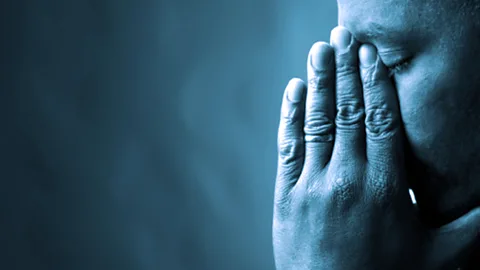
Their faces carried a different kind of fatigue. Not the fatigue of waiting for hours, but the fatigue of waiting for years
DR SUHAIL NAIK
Busy outpatient departments, two to three hundred patients every single day, scorching summer heat, exhausted fingers holding pens hardened with pressure callosities, sweating parents waiting endlessly with their sick children for just a few moments of consultation.
Amid this endless daily rush in hospitals, one group always stood apart in silent suffering — parents of children with neuro-disabilities, syndromes, developmental delays, cerebral palsy, behavioural disorders, and refractory neurological illnesses.
Their faces carried a different kind of fatigue.
Not the fatigue of waiting for hours, but the fatigue of waiting for years.
Years of unanswered questions.
Years of social isolation.
Years of carrying children in their arms from one hospital corridor to another.
To decrease even a fraction of their agony, we introduced a small humanitarian gesture. We issued them a simple notebook costing barely twenty rupees and used it as a special symbol for the nursing staff and orderlies, so these parents could directly enter for consultation without standing in long queues or struggling for routine OPD tickets.
It was not charity.
It was guilt.
Somewhere deep within ourselves, we subconsciously knew that our healthcare systems, delayed interventions, poor perinatal care, lack of rehabilitation infrastructure, social neglect, and systemic failures were also responsible for many of these lifelong tragedies. Only a minority truly had a purely genetic basis.
The public across all three districts of North Kashmir appreciated this humane gesture, and thankfully the younger generation of paediatricians continued this legacy with compassion.
Most of these children were known to us since birth. We had worked our entire lives in the Valley. We knew their stories, their crises, their neonatal struggles, their delayed cries, their seizures, their MRIs, their social realities.
And most importantly —we knew the painful truth.
For many of them, there was nothing dramatically actionable left except good seizure control, nutritional support, physiotherapy, speech therapy, prevention of aspiration, maintaining hygiene, preventing bed sores, and preserving dignity.
Then one fine day, hope arrived wearing the coat of “super-specialization.”
We were informed that a visiting pediatric neurologist from outside the Valley had started clinics in Kashmir. Soon, almost all our so-called cerebral palsy patients began visiting him.
The consultation fee itself was massive.
Immediately, every child was subjected to EEGs, MRI Brain, MRI Spine, NCV studies, TMS, GCMS, metabolic panels, and endless investigations. Entire cohorts of devastated families ran from laboratory to laboratory.
And after all the sophisticated investigations, almost everyone received the same prescription:
Pacitane 2 mg.
That single tablet became a symbol of hope.
Parents sold savings, borrowed money, travelled long distances, and emotionally convinced themselves that perhaps their child was finally “curable” and that local doctors had wasted precious years of their lives.
But after the investigations were exhausted and the emotional economy around hope had been completed, the specialist quietly stopped visiting the Valley.
His work was done.
The parents slowly returned back to us one by one. This time physically exhausted, mentally shattered, and economically devastated.
Many of them could no longer make direct eye contact with us.
Not because they hated us, but because hope itself had humiliated them.
Years later, history repeated itself again.
This time it was not a visiting social-media-promoted doctor. This time it was “Genetic Testing.”
“Clinical Exome Sequencing.”
Once again, emotionally vulnerable parents were made to believe that somewhere inside a laboratory report existed the final answer to their child’s suffering.
Poor families started arranging money desperately. Many mothers literally sold their earrings and jewellery.
And the painful irony was that a large proportion of these children already had obvious established clinical diagnoses, severe acquired cerebral insults, microcephaly less than minus two standard deviations, profound hypoxic injuries, or unmistakable clinic-oradiological pictures of cerebral palsy.
Yet the tests continued. After months of waiting with trembling hope, the reports finally arrived.
“Variant of Uncertain Significance.”
Then came another recommendation: “Parental testing advised.”
More uncertainty. More expense. More emotional exploitation disguised as scientific advancement.
When this professionally unethical, scientifically unjustified, and clinically non-actionable practice was brought to my notice, I strongly raised the issue with concerned people.
I told them very clearly:
Testing known cerebral palsy patients indiscriminately, when the etiological diagnosis is already clinically evident, is not precision medicine.
It is commercialization of parental grief.
We are certain about many of these children’s diagnoses.
Your reports themselves are uncertain.
The response I received from one of the stakeholders still echoes painfully in my mind.
He said: “Doctor, we may be uncertain about the gene…but we are very certain about managing CMEs, food, flights, and shawls.”
That single sentence summarised the tragedy of modern medical commerce more honestly than any textbook ever could.
Thank you very much.
(The author is a Senior Consultant and Assistant Professor, Department of Paediatrics, GMC Srinagar and has 50 research publications in paediatric neurology)