
Cultural diversity is not a destination humanity has reached. It is a work perpetually in progress and perpetually at risk
MIR ALTAF
A World of Staggering Plurality
On World Cultural Diversity Day, the most important cultural monument should neither be a building nor a manuscript. It should be an old woman in a remote village who knows something no one else does: a song, a dyeing technique, a way of reading the monsoon sky, a word for a feeling that no other language has ever named. Because when she is gone, that knowledge does not retire into an archive. It disappears from the world entirely, as completely as though it had never existed.
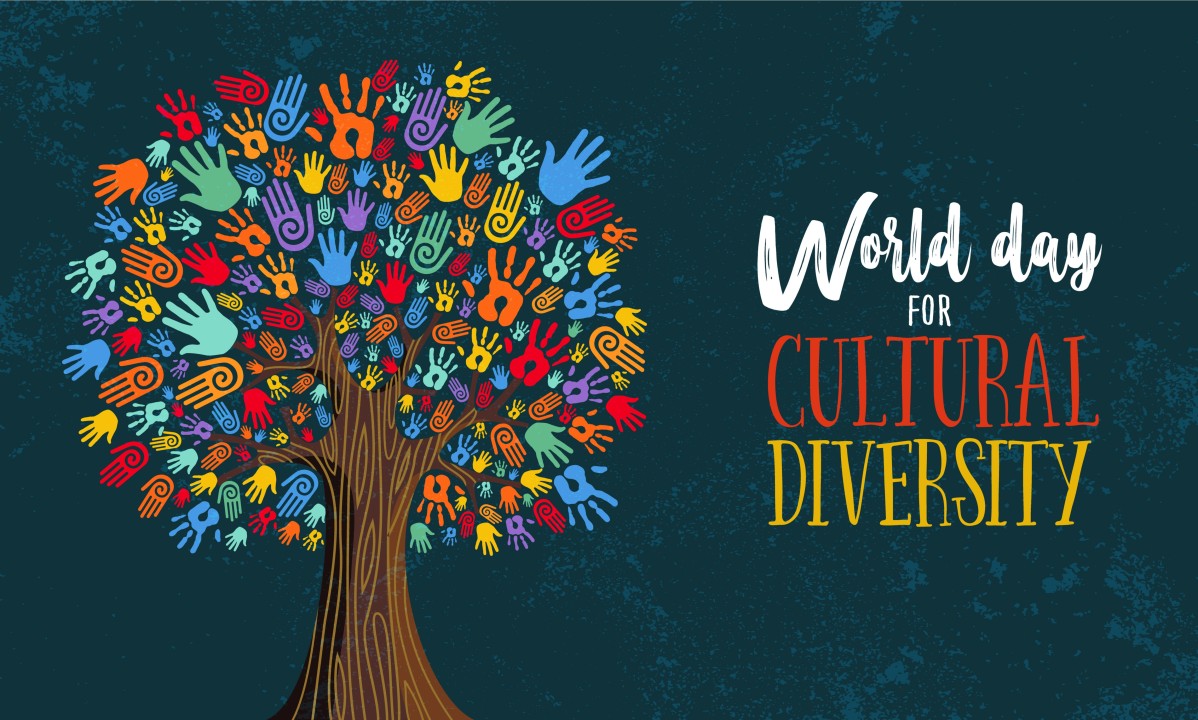
This is what is truly at stake on May 21, when the world observes the Day for Cultural Diversity for Dialogue and Development, proclaimed by the United Nations in 2002 following the adoption of UNESCO’s Universal Declaration on Cultural Diversity. It is not merely a commemorative occasion. It is a standing invitation to humanity to recognise that our differences are not fault lines to be feared, but fertile ground from which understanding, creativity, and enduring peace can grow.
In 2026, the invitation carries a new weight. The world is changing fast and not always in ways that are kind to difference. The real question for our time is not whether cultures will meet. They will, every day, everywhere. The question is whether those meetings will leave both sides richer or diminished.
| 7,000+ Languages spoken worldwide | 370M+ Indigenous peoples globally | ~50% Of world languages at risk | $2.25T Cultural industries globally |
Across six continents, cultural diversity manifests in astonishing forms, like in the oral traditions of West African griots, the architectural philosophy of Japanese ma (negative space), the communal cosmology of Andean Pachamama worship, and the stoic civic ethos of Scandinavian societies. Each represents not simply a different way of doing things, but a fundamentally different way of understanding what it means to be human.
UNESCO’s 2005 Convention on the Protection and Promotion of the Diversity of Cultural Expressions remains the foundational legal instrument in this field, recognising cultural goods and services as bearers of identity and values rather than mere commercial commodities. Yet the gap between legal recognition and lived reality yawns wide.
Languages disappear at the rate of roughly one every two weeks. A child growing up today in rural Bolivia or the forests of Odisha is simultaneously more connected to global culture than any previous generation, and more at risk of losing their own.
“Cultural diversity is as necessary for humankind as biodiversity is for nature.” — UNESCO Universal Declaration on Cultural Diversity, 2001
The Republic That Is a Civilisation
To speak of cultural diversity in an Indian context is to speak in superlatives that nonetheless fall short of the reality. India is not merely a diverse country; it is a civilisation that has functioned, across millennia, as a living laboratory of cultural coexistence. With 22 officially recognised languages and over 1,600 mother tongues documented in the census, eight major religions, dozens of distinct classical art forms, and a culinary geography that transforms every hundred kilometres, India’s diversity is not incidental to its identity. It is its identity.
| 1,600+ Mother tongues documented | 705 Scheduled tribal communities | 16 UNESCO ICH elements inscribed | 43 World Heritage Sites |
The philosophical underpinning of India’s approach to diversity is perhaps best captured in the ancient concept of Vasudhaiva Kutumbakam — the world is one family. This is not a passive tolerance of difference but an active embrace of it, rooted in the understanding that plurality is not a problem to be managed but a wisdom to be drawn upon.
The Vedic tradition of debating opposing philosophical systems side by side, the Sufi dargahs that welcomed devotees of all faiths, the syncretic folk music that blended Hindu and Islamic devotional vocabularies, these were not accidents of geography but the fruits of a deliberate cultural philosophy.
Modern India carries this inheritance forward imperfectly but persistently. The constitutional protections for linguistic and cultural minorities under Articles 29 and 30 are among the most robust frameworks for minority cultural rights in the world. The Sangeet Natak Akademi, Sahitya Akademi, and Lalit Kala Akademi have, for seven decades, worked to document, sustain, and celebrate art forms from every corner of the subcontinent.
On this World Diversity Day, India’s challenge and its opportunity is to translate constitutional aspiration into living practice. That means not merely preserving heritage in museums and festivals, but ensuring that the communities who are the living custodians of that heritage have the economic security and institutional support to continue creating, not just surviving.
India’s Northeast offers perhaps the most concentrated illustration of this challenge and potential. The eight sister states together are home to over 200 distinct ethnic groups and also over 200 languages and dialects.
Manipuri dance and Mizo choral traditions, the textile arts of the Nagas and the boat festivals of Assam, this region is not a peripheral curiosity but a cultural heartland. The recent granting of Classical Language status to additional Indian languages is a step in the right direction; what is needed now is the sustained, granular work of documentation, transmission, and economic empowerment of cultural practitioners.
The Valley Where Cultures Embraced: Kashmir Focus
Kashmir occupies a singular place in the cartography of world culture. Positioned at the crossroads of South Asia, Central Asia, and the Silk Road, the valley absorbed and synthesised influences from Persian, Mughal, Buddhist, Shaivite, and Central Asian traditions across fifteen centuries of cultural exchange. The result is a remarkably original culture with its own aesthetic language, philosophical tradition, and social fabric.
The tradition of Kashmiriyat, the composite cultural identity of the valley, transcending religious lines, represents one of the most instructive examples of cultural coexistence in South Asian history. Shared shrines, syncretic devotional poetry in the tradition of Lal Ded and Sheikh Nooruddin Noorani, these were the lived texture of Kashmiri pluralism.
The Kashmiri handicraft sector, comprising Pashmina weaving, Kani shawls, papier-mâché, walnut woodcarving, and carpet weaving, is not merely an economic asset but a carrier of cultural memory, with design vocabularies passed down across generations.
On May 21st, Kashmir deserves recognition as a cultural treasure to be celebrated and supported. The Sufi musician in a Srinagar shrine keeping alive a centuries-old devotional tradition, the young weaver in Kanihama learning a pattern her great-grandmother designed, these are not relics. They are the living argument for why cultural diversity matters.
Hear Them While They Are Still Speaking
The theme animating this year’s global observance might be summarised simply: cultural diversity is not a soft concern for idealists. It is a hard necessity for survival. Monocultures in agriculture, in biology, in thought are brittle. They collapse under pressure that a diverse ecosystem absorbs and adapts to. A world that allows its cultural diversity to erode, for the sake of convenience or the comforting frictions of sameness, is a world that is quietly dismantling one of its most powerful tools for resilience.
The work of cultural diversity is never finished. It must be renewed in each generation, in each institution, in each conversation. It requires not just policy but practice. The practice of listening before speaking, of learning before judging, of recognising that the stranger across the cultural divide carries within them knowledge, beauty, and ways of understanding the world that you do not have and cannot replace.
Many tongues, many traditions and through all of them, one human conversation
From the terraced paddies of Nagaland to the boulevards of Berlin, from the weavers of Srinagar to the storytellers of Timbuktu, the world’s cultures are still speaking. Our task as citizens, as institutions, as a civilisation, is to ensure that they are also heard.
(The author is a Kashmir-based writer and educator and can be reached at: miraltaf966@gmail.com)