

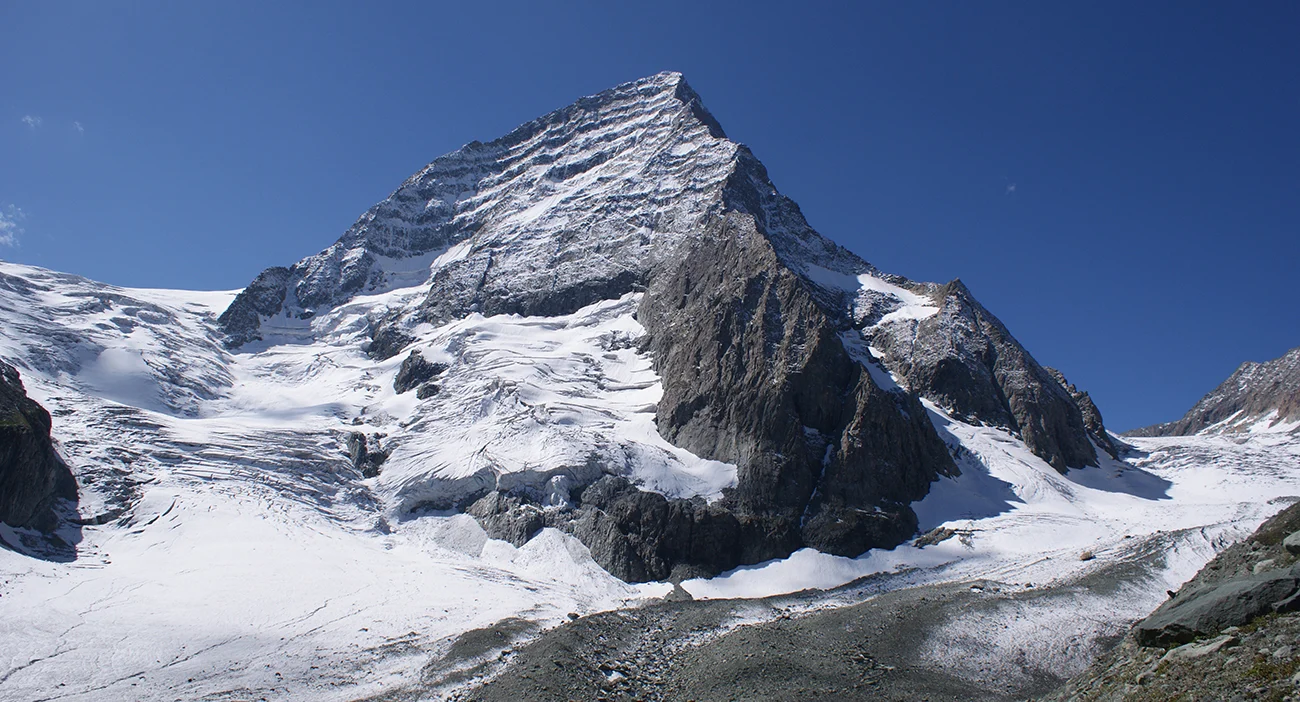
‘Valley’s glaciers fragmenting, exposing vast stretches of barren mountain terrain’
Abid Bashir
Srinagar, May 15: The colour of the Himalaya above Kashmir is beginning to change. What once appeared as uninterrupted expanses of white snow and permanent ice across Valley’s upper mountains is now steadily giving way to exposed rock, loose sediment and shrinking glacier remnants, according to a major study led by researchers from the University of Kashmir.
The four-decade scientific assessment, based on satellite imagery, GPS surveys and geomorphological mapping between 1980 and 2018, reveals that glaciers across the Kashmir Himalaya are not only retreating rapidly but also visibly transforming the landscape of the upper mountains.
Researchers mapped 147 glaciers across the region and found that nearly 30 square kilometres of glacier area disappeared during the 38-year period. Six glaciers vanished completely, while several others fragmented into smaller, unstable ice bodies.
But scientists say the deeper story lies in what the retreat has left behind. As glaciers withdraw uphill, large stretches of dark rocky terrain are emerging where snow and ice remained for centuries. The study documented widening barren slopes, expanding periglacial zones, newly formed moraine-dammed lakes and braided meltwater streams spreading across freshly exposed mountain surfaces.
Researchers say the upper Himalaya is gradually shifting from a snow-dominated landscape into a rock-dominated one.
The study, led by glaciologist Professor Shakil Ahmad Romshoo and his team, found that the most severe glacier retreat occurred between 1992 and 2013 — a period marked by rising temperatures and changing precipitation patterns across Kashmir.
Scientists observed that winter precipitation in many high-altitude regions is increasingly falling as rain instead of snow, weakening the natural replenishment cycle that sustained glaciers for centuries.
The changing snowline is now becoming one of the clearest visual signs of this transformation.
Researchers found that glaciers situated at lower elevations and on south-facing slopes experienced the fastest retreat because of greater exposure to solar radiation. Smaller glaciers proved especially vulnerable, with many losing more than 40 per cent of their area during the study period.
The Lidder and Sindh basins — home to most of Kashmir’s surviving glaciers — recorded some of the highest losses. Scientists warned that these glacier systems, once considered stable frozen reservoirs, are now behaving like rapidly changing climate-sensitive zones.
The study also points to rising black carbon concentrations in the Valley as a major factor accelerating glacier melt. Dark soot particles settling on snow surfaces reduce reflectivity, causing glaciers to absorb more heat and melt faster.
Beyond the loss of ice, researchers say the transformation could alter the thermal behaviour of the mountains themselves. Snow-covered surfaces naturally reflect sunlight, while exposed rock absorbs heat, potentially intensifying local warming and accelerating glacier retreat further.
Scientists also observed a troubling hydrological shift. Glacier-fed streams initially carried increased water flow because of accelerated melting, but stream discharge later began declining as glacier reserves depleted — signalling a gradual weakening of natural water storage in the Himalaya.
For generations, Kashmir’s upper mountains symbolised permanence — landscapes where snow survived summers and glaciers defined the skyline. The latest scientific evidence now suggests that permanence itself is retreating deeper into the Himalaya. The mountains above Kashmir are still standing tall. But slowly, almost imperceptibly, they are losing their white skin.