

Underground works begin on major hydropower venture
Rs 2,709-cr project to boost hydropower generation, meet rising power demand
Idrees Bukhtiyar
Srinagar, June 2: The long-awaited Uri-I Stage-II Hydroelectric Project has formally taken off, marking a significant milestone in Jammu and Kashmir’s efforts to strengthen its power infrastructure and enhance energy generation capacity.
The project is expected to boost electricity production, improve energy security and contribute to the region’s economic development, opening a new chapter in J&K’s power sector.
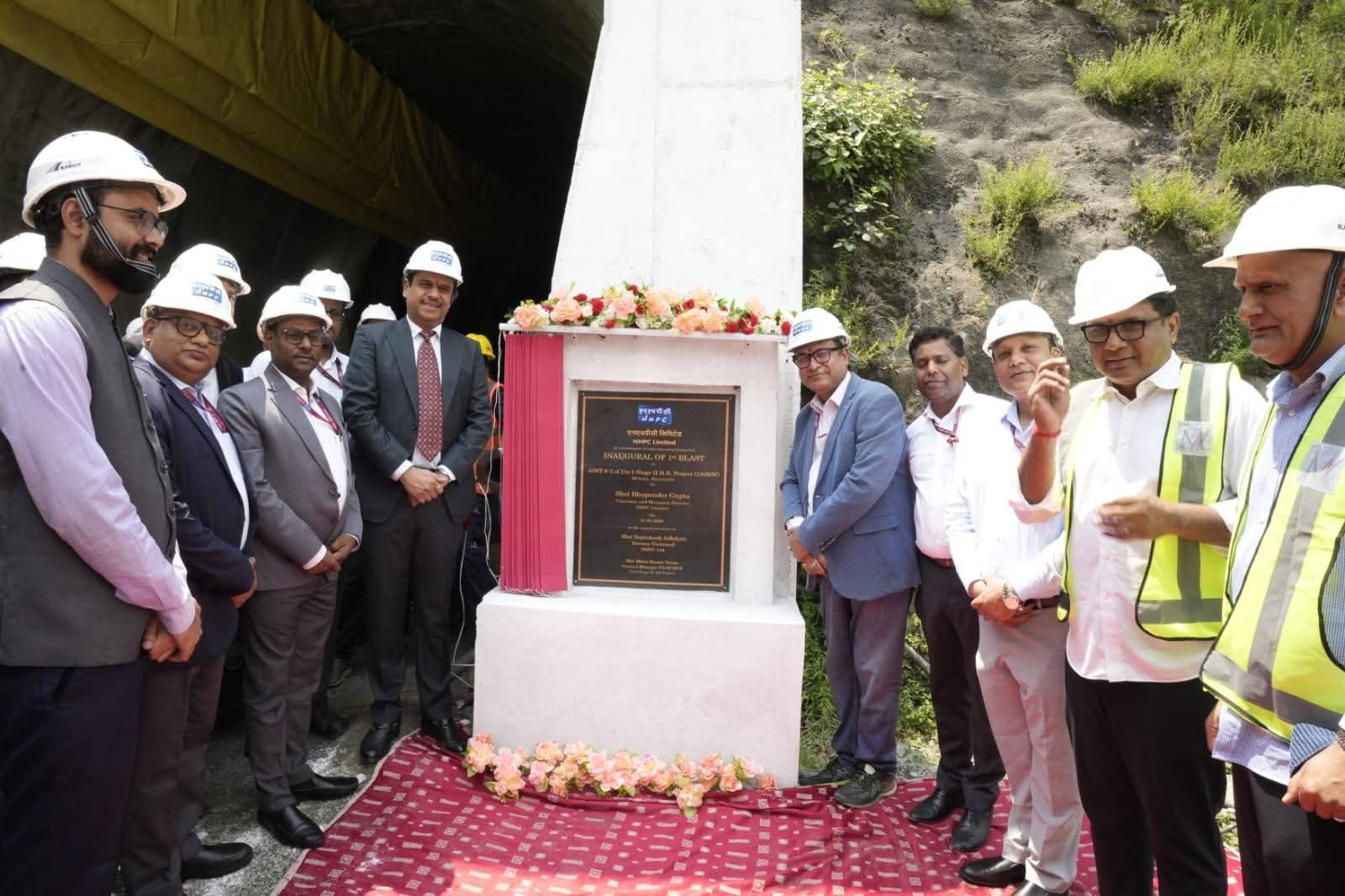
On Tuesday the first blast at Adit-3 formally marked the commencement of major underground works for the ambitious Uri-I Stage-II Hydroelectric Project.
The ceremonial blast, carried out in the presence of the Chairman and Managing Director of NHPC, signalled the beginning of a new phase of infrastructure development for the 240 MW hydroelectric project, which is expected to play a crucial role in strengthening the Union Territory’s power generation capacity.
Being developed by NHPC Limited on the Jhelum River in Baramulla district, the Uri-I Stage-II project is an extension of the existing Uri-I Hydroelectric Project. With an installed capacity of 240 MW, the project will house two generating units of 120 MW each and is designed to generate approximately 932 million units of clean electricity annually.
For a region that has long relied on imported power to meet growing energy needs, the project represents much more than an engineering endeavour. It is being viewed as a strategic investment in Jammu and Kashmir’s long-term energy security and sustainable development.
Estimated to cost Rs 2,708.95 crore, the project is expected to enhance hydropower output in the region and contribute significantly to meeting rising electricity demand. Officials believe it will strengthen the power infrastructure while supporting the transition towards cleaner and renewable energy sources.
The commencement of drilling and blasting operations marks the start of some of the most challenging engineering works associated with the project. These activities will facilitate the construction of critical underground infrastructure, including water-conveyance tunnels and a cavernous powerhouse complex that will form the heart of the hydroelectric station.
Engineers involved in the project said the underground works are being undertaken in demanding geological conditions. The tunnel alignment is protected by a rock cover of nearly 400 metres, while the lateral rock cover ranges between 300 and 500 metres at different locations. Such conditions require meticulous planning, advanced engineering techniques and stringent safety measures throughout the construction phase.
The decision to build key project components underground reflects modern hydropower engineering practices that seek to minimise surface disturbances while ensuring operational efficiency and environmental sustainability.
Beyond its technical dimensions, the Uri-I Stage-II project is expected to generate employment opportunities during the construction phase and stimulate economic activity in the region. Large-scale infrastructure projects often create demand for skilled and unskilled labour, transportation services and local businesses, providing an economic boost to surrounding communities.
As drilling machines begin carving their way through the mountains of Uri, the project stands as a symbol of Jammu and Kashmir’s expanding energy ambitions. Once completed, the hydroelectric station is expected to not only add substantial renewable energy capacity to the grid but also reinforce the region’s role as a major contributor to India’s hydropower sector.
With underground construction now underway, the Uri-I Stage-II Hydroelectric Project has moved from planning to execution, setting the stage for what could become one of the most significant additions to Jammu and Kashmir’s energy infrastructure in the coming years.