

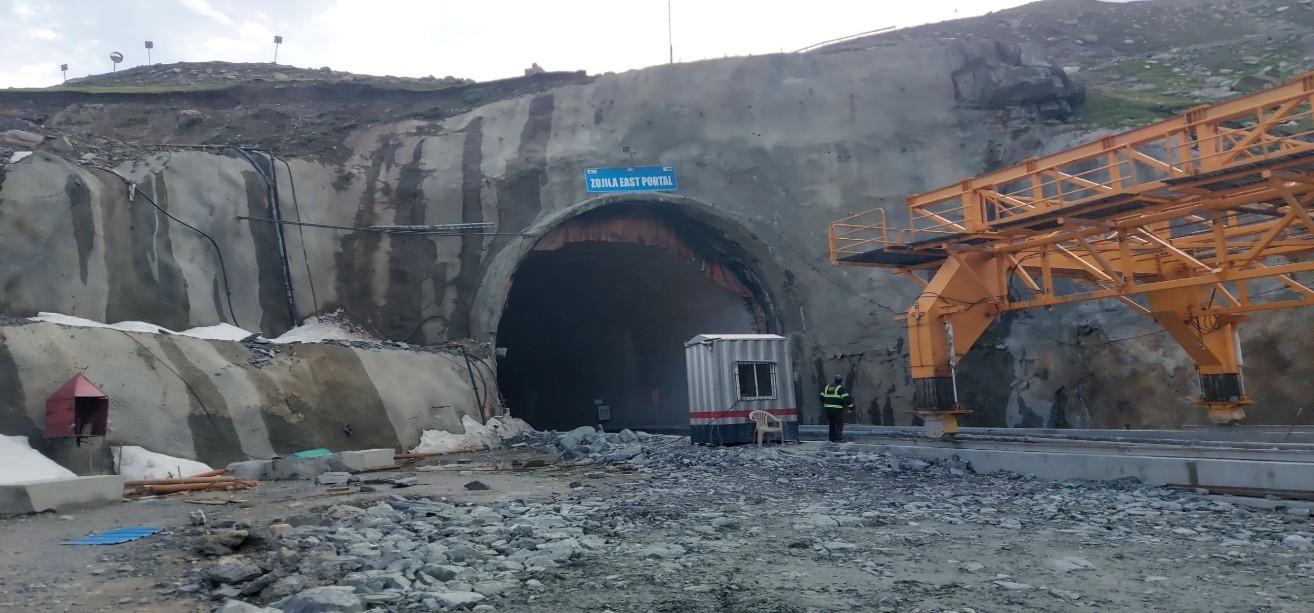
Asia’s longest bi-directional road tunnel to end Ladakh’s winter isolation
Umar Raina
Drass, May 12: The strategically significant Zojila Tunnel project is nearing a major milestone, with only 200 metres of excavation work remaining before the much-awaited breakthrough, officials associated with the project said.
Once completed, the 13.15-kilometre tunnel will become Asia’s longest bi-directional road tunnel, providing all-weather connectivity between Kashmir and Ladakh and ending the seasonal isolation caused by heavy snowfall at the Zojila Pass, they said.
The breakthrough is expected by the first week of June, while the full completion of the project has been targeted for February 2028. After the breakthrough, further work on finishing, installation of lights, girding, and several other processes will begin.
Special attention has been given to the ventilation system, for which several shafts have been constructed. Around 17 to 18 kilometres of approach roads have also been developed. To make the route avalanche-free, several smaller tunnels have been constructed as well. The Nilgrath Tunnel, which is part of the same project, has already been completed, and a major bridge has also been finished.
The tunnel is extremely important not only for common transporters and civilians but also from a defence point of view. Earlier, heavy snowfall and avalanches at Zojila Pass would often cut off Ladakh from the rest of the region. Once the tunnel is fully completed, Ladakh will remain connected throughout all 12 months of the year.
Residents of Drass and Kargil expressed hope and relief over the rapid progress.
Zahoor Ahmed, a 45-year-old resident of Drass working on the project, said the tunnel would transform lives. “We have faced immense hardships for decades due to the closure of Zojila Pass during winters. Roads remained shut for nearly six months, patients suffered, and even basic travel to Srinagar became impossible. People had to stock firewood, rations, and other essentials for the winter months. Now we can travel to Srinagar and return the same day. It is a huge relief for common people,” he said.
Mehrajuddin, a construction manager with MEIL (Mega Engineering and Infrastructure Limited), said the tunnel is being excavated simultaneously from both the Ganderbal side and the Ladakh side using advanced New Austrian Tunnelling Methods under extremely challenging conditions, including water ingress, avalanche-prone terrain, and harsh weather.
Over 1,400 personnel are currently deployed at the site, with nearly 79 per cent of the workforce comprising residents. More than 400 machinery units are being used for round-the-clock work. The project had suffered a setback in January 2023 after an avalanche claimed two workers’ lives and damaged equipment, but construction resumed with additional safety measures.
Once completed, the Zojila Tunnel is expected to reduce travel difficulties, eliminate weather-related road closures, boost tourism, strengthen India’s strategic and defence logistics along the northern borders, and provide a safer route through the challenging Himalayan terrain.