

‘Handlers, hawala networks, narcotic hotspots being tracked through tech-driven mapping’
- Drug addicts to be rehabilitated, not criminalised
- Focus on awareness, counselling
- Informers will be rewarded
Abid Bashir
Srinagar, May 13: Taking the anti-drug war to its next and most decisive phase, Srinagar Police are now deploying Artificial Intelligence and technology-based intelligence mapping to dismantle the entire narcotics ecosystem — from street-level peddlers to handlers, hawala operators and financial backers.
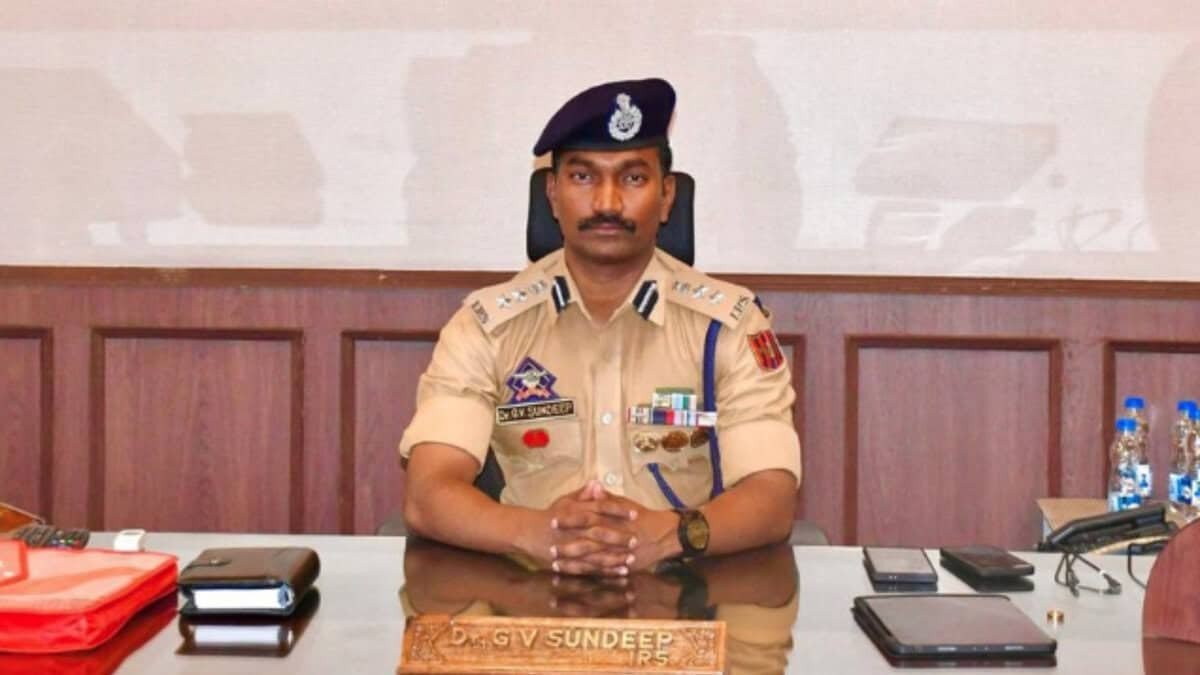
Speaking exclusively to Rising Kashmir, Senior Superintendent of Police (SSP) Srinagar, Dr GV Sundeep Chakravarthy said the fight against drugs has entered a “next level phase”, where technology, financial surveillance and intelligence-based targeting are being used to identify illegal networks, suspicious transactions and narcotics hotspots across the district.
“We are not only targeting street-level peddlers now. Our next focus is on handlers, hawala linkages, illegal assets and the larger financial network sustaining this menace. Through AI and technology-driven mapping, suspicious financial transactions, illegal linkages and hotspots are being identified and acted upon,” he said.
Calling the Nasha Mukt Bharat Abhiyan an “Andolan” rather than merely a campaign, the SSP said drug abuse is not just a criminal issue but a collective societal battle involving police, parents, teachers, civil society and citizens alike.
“Our aim is to break the supply chain and hit the narcotic ecosystem financially. Once the money trail is disrupted, the entire network weakens,” he said.
According to the SSP, Srinagar Police have so far registered 101 NDPS cases and arrested 143 notorious drug peddlers during the ongoing drive. Properties worth nearly Rs 24 crore linked to narcotics proceeds have been attached, while several illegal constructions raised through drug money have also been demolished.
He further revealed that authorities are initiating the cancellation of driving licences and Aadhaar cards of drug peddlers as part of the intensified crackdown. Ten notorious smugglers have already been taken into preventive custody.
Dr Chakravarthy said police are relying heavily on intelligence-based operations and public participation to dismantle the network. “People have supported us immensely in the last one month. Identities of informants are being kept strictly confidential, and some are also being suitably rewarded,” he said.
On the role of educational institutions, the SSP said schools, colleges, mohalla committees and private coaching centres have been actively engaged in awareness and prevention programmes. “We are counselling students and urging them to pick cricket bats and laptops, not drugs. Prevention is always better than cure,” he said.
Drawing a clear distinction between traffickers and addicts, the SSP asserted that police do not view addicts as criminals. “Drug addicts are patients. Our effort is to protect them, counsel them and rehabilitate them properly so they can rejoin society as normal individuals. Our target is smugglers and peddlers, not addicts,” he added.
Sending out a stern warning to narcotics networks operating in the city, the SSP said Srinagar Police will continue to act with zero tolerance. “We will be ruthless and go very tough against drug peddlers. There will be no space for them in society,” he said.