

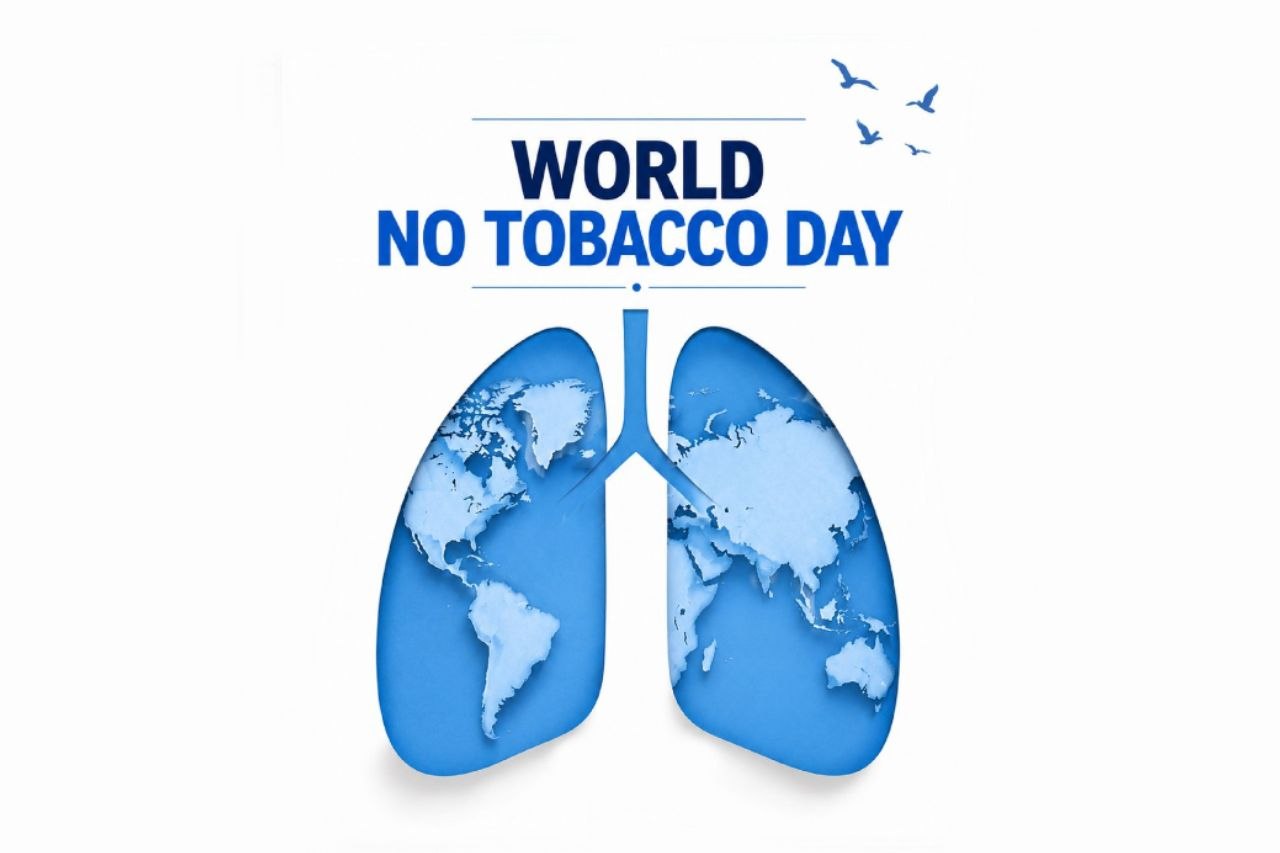
Tobacco is the leading cause of cancer worldwide and is considered responsible for around 25% of all cancer-related deaths
SHEIKH SHABIR KULGAMI
I begin with the quote from George Bernard Shaw: “A cigarette is a pinch of tobacco rolled in paper with fire at one end and a fool at the other.” Though smoking is not seen as anything to feel proud of, the practice appears to be on the rise, especially among youth, the reservoir of national power for a country.
World No Tobacco Day is observed annually on 31 May, bringing together governments, health organisations, civil society, and youth from across the world to raise awareness of the threats of tobacco use and to promote effective measures to prevent tobacco addiction.
Tobacco is the leading cause of cancer worldwide and is considered responsible for around 25% of all cancer-related deaths. Globally, it drives millions of cases annually, with lung and oral cancers being the most registered and accounting for up to 60% of all cancer cases in India. Tobacco use is attributed to around 40 percent of the cancer burden in Jammu and Kashmir, where tobacco-driven lung and upper gastrointestinal cancers remain very high.
The Indian Council of Medical Research (ICMR) projected India’s cancer cases to cross 1.56 million by 2025. Almost one-third of all cancer cases in India and about half of cases among men are ascribed to tobacco use.
According to the Global Cancer Observatory (GLOBOCAN) estimates, there were 19.3 million cancer cases worldwide in 2022. India ranked third after China and the United States of America in the number of cancer incidents.
GLOBOCAN predicted that cancer cases in India would rise to 2.08 million, accounting for an increase of 57.5 per cent in 2040 from 2020. The National Cancer Registry Programme Report reported the cancer incidence from 28 Population-Based Cancer Registries (PBCRs) for the years 2012-2016. This was used as the basis to calculate cancer estimates in India. Information on the population at risk was extracted from the Census of India to estimate the age–sex-stratified population.
Each year, World Lung Cancer Day falls on Aug 1. The good thing is that a decline has been noted in the incidence of lung cancer worldwide by 2.2 to 2.3 per cent a year, in men since the mid-1980s, though only since the mid-2000s in women.
Notably, smoking is understood as a major reason for lung cancer and accounts for 80% of lung cancer deaths; the deadly disease also affects non-smokers. People who have never smoked account for 20% of lung cancer deaths. Other risk factors include the use of multiple forms of tobacco, such as cigarettes, pipes/hookahs. And chewing tobacco is also deepening its roots.
There is no denying that efforts remain underway to discourage people from smoking tobacco in any form. But seemingly to no avail because about 30/% of adults aged just 14- plus use tobacco in multiple forms. The Kashmiris are not an exception. The literature about the causal relationship between lung cancer and tobacco smoking mostly concerns cigarettes.
Hookah smoking is still in vogue in many parts of the Kashmir valley, and is generally believed to be innocuous because of the passage of the smoke through water before inhalation. An earlier study from Kashmir also reported hookah smoking as the dominant form of smoking in a small group of 25 lung cancer patients.
Additionally, a good percentage of non-smokers are affected by the second-hand smoke in public transport, public places and offices. Despite the government’s repeated health warnings in digital and print media, people continue to smoke nonstop. Ironically, some highly educated people smoke — openly and bravely.
Smoking gives relief from stress is a common excuse, mostly in lower-income groups. Strong lobbying by the tobacco industry also encourages tobacco users. As the indiscriminate use of tobacco in many forms continues to grow, more and more people are taking to it, only to add to the lung cancer cases and the expenses to fight the disease.
Notwithstanding the strict government directions prohibiting the use of tobacco inside or outside (nearby) the educational institutions, the disappointing trend of smoking is yet not out of sight to the satisfactory extent. Therefore, smoking practices gain ground while the codal instructions to avoid smoking in public places are not strictly abided by.
A small story. Once, this author was rebuked by an officer for entering his office with a newspaper in my hand. ” Do you just read newspapers at school?” the officer roared. ” Sir, reading is no crime, but smoking in an office is,” this author replied. At once, the officer — smoking at that time— scolded me and halted for a month the necessary action on my important official work in his office.
Experience has shown that health is wealth. Practices should be adopted for a healthier and safer lifestyle, with the government stepping up policymaking to fight back. Traditional policies that are in place to discourage smoking need a revisit; preferably supported by research to include newer trends, so that people can be discouraged from practices that lead to potentially serious and sometimes fatal diseases such as lung cancer.
The ongoing Nasha Mukt Bharat Abhiyan, aimed at liberating Bharat from substance abuse, is a handsome and highly effective approach to discourage the addiction to drugs. The campaign should impact smoking addiction as well.
Moreover, grown-ups need to set examples of smoking -free behaviour wherever they are. Anti-smoking literature is likely to have little impact unless what is preached is practised. It is high time that people saw tobacco as an enemy and stayed away from it.
(The author is a teacher and RK columnist and can be reached at: sheikhshabir518@gmail.com)