
Mansoor Peer
Srinagar, May 31: J&K has seen improvements in maternal and child healthcare indicators, vaccination coverage, institutional deliveries and women’s empowerment, according to the National Family Health Survey-6 (NFHS-6). However, the survey also points to a growing burden of obesity, diabetes and hypertension among adults.
The latest survey shows that 96.3 percent of households in J&K have at least one member covered under a health insurance or financing scheme, a sharp rise from 13.8 percent recorded in NFHS-5 (2019-21).
It reveals that households having bank accounts increased to 98.7 percent from 96.8 percent, while internet usage among women rose to 63.6 percent from 43.3 percent and among men to 80.8 percent from 62 percent.
In maternal healthcare, 89.9 percent of mothers had an antenatal check-up in the first trimester compared to 86.6 percent in NFHS-5.
As per the figures, mothers receiving at least four antenatal care visits increased to 90.6 percent from 81.1 percent, while institutional births rose to 93.6 percent from 92.4 percent. Births attended by skilled health personnel stood at 94.8 percent.
The survey also reported improvement in postnatal care. Around 88.2 percent of mothers received postnatal care within two days of delivery, up from 84.2 percent, while 88.7 percent of children received postnatal care within two days of birth compared to 81.5 percent in the previous survey.
Child immunisation indicators showed notable gains. Full vaccination coverage among children aged 12-23 months increased to 89.4 percent from 88.2 percent.
Coverage of three doses of rotavirus vaccine rose dramatically to 91.4 percent from just 5.3 percent in NFHS-5. Measles vaccination coverage also improved, with 95 percent of children receiving the first dose and 82.4 percent receiving the second dose.
Nutrition indicators among children improved as well. Stunting among children under five years declined to 21.4 percent from 28.9 percent, wasting fell to 10.6 percent from 19 percent, and underweight prevalence dropped to 14.5 percent from 21 percent.
However, exclusive breastfeeding among children under six months declined slightly to 59.2 percent from 62 percent.
The survey indicates a decline in fertility, with the Total Fertility Rate (TFR) falling to 1.8 from 1.4, while women aged 15-19 years who were already mothers or pregnant at the time of the survey increased to 1.8 percent from 1 percent.
Women’s empowerment indicators recorded improvement. Women participating in three key household decisions increased to 91.3 percent from 81.6 percent. Women having their own bank account rose to 93 percent from 84.9 percent, while mobile phone usage among women increased to 76.9 percent from 75.2 percent. Use of hygienic menstrual protection methods among women aged 15-24 years rose to 82.5 percent from 74.5 percent.
Despite these gains, NFHS-6 highlights growing lifestyle-related health concerns. The proportion of overweight or obese women increased to 36.7 percent from 29.4 percent, while among men it rose to 27.1 percent from 31.7 percent.
High or very high blood sugar levels or use of diabetes medication increased to 13 percent among women and 11.3 percent among men, compared to 8.7 percent and 8 percent respectively in NFHS-5.
Hypertension also showed an upward trend. Elevated blood pressure or use of medication to control it was reported among 25 percent of women and 20.9 percent of men, up from 20 percent and 18.9 percent respectively in the previous survey.
Tobacco consumption remains significantly higher among men, with 30.1 percent reporting use of tobacco compared to 3.1 percent women. Alcohol consumption among men stood at 7.3 percent, while only 0.2 percent of women reported consuming alcohol.
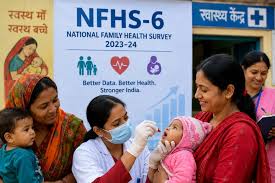
The National Family Health Survey-6 was conducted during 2023-24 by the Ministry of Health and Family Welfare with the International Institute for Population Sciences (IIPS), Mumbai, as the nodal agency.
The survey covered nearly 6.79 lakh households across 715 districts in the country and provides key evidence on population, health, nutrition and family welfare indicators.