

Experts warn declining snowfall, shrinking glaciers, rising temp could threaten water security
Abid Bashir
Srinagar, Jun 09: Jammu and Kashmir is staring at a deepening precipitation crisis, with the Union Territory recording a massive 42 per cent rainfall deficit during the first five months of 2026, raising fresh concerns over water security, agriculture, hydropower generation and the long-term health of glaciers across the UT.
Official precipitation figures reveal that Jammu and Kashmir received significantly below-normal rainfall during May as well, recording 49.4 mm precipitation against the normal of 77.5 mm — a deficit of 36 per cent.
The latest deficit continues a worrying trend that has persisted since late last year, with every month since November 2025 ending with below-normal rainfall and snowfall across the region.
An independent weather forecaster said the emerging pattern is becoming increasingly concerning, particularly because repeated winter precipitation deficits are directly affecting snow accumulation in the higher reaches.
“The concern is not only about one dry season. We are witnessing a longer trend of below-normal precipitation over successive months and winters. Reduced snowfall impacts glaciers and seasonal snow reserves that act as natural water storage systems for rivers and streams,” said Faizan Arif, an independent weatherman.
According to the data, February recorded the sharpest precipitation deficit at minus 89 per cent, followed by January (-23%), March (-34%), April (-13%) and May (-36%), cumulatively pushing the January-May shortfall to 42 per cent.
Several districts across Kashmir and Jammu divisions recorded alarming deficits during May. In Kashmir division, Shopian emerged as the driest district with an 83 per cent deficit, receiving just 13.5 mm rainfall against the normal of 78.2 mm. Budgam and Kulgam both recorded a 69 per cent shortfall, while Anantnag, Pulwama and Srinagar also remained significantly below normal.
In Jammu division, Ramban recorded a 65 per cent rainfall deficit, followed by Kishtwar (-57%), Kathua (-56%), Jammu (-55%) and Reasi (-53%).
Only a few districts reported near-normal or excess precipitation. Ganderbal and Kupwara remained close to normal, while Poonch recorded a substantial 49 per cent surplus rainfall during May.
Experts say the prolonged dry pattern is particularly worrying because the region heavily depends on winter snow accumulation to sustain river flows, irrigation systems and drinking water supply during summer months.
Faizan Arif said rising temperatures are further accelerating glacier and snow melt across mountain regions, creating a dangerous imbalance between snowfall replenishment and melt rates.
“Initially, accelerated snowmelt may sustain river discharge temporarily, but over time, declining snowfall and shrinking glaciers can reduce long-term water availability. That could severely impact hydropower, irrigation, horticulture and groundwater recharge,” he warned.
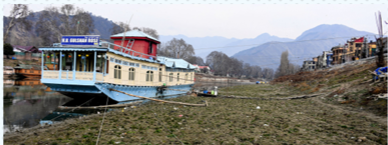
The precipitation deficit comes at a time when several parts of Kashmir have already begun witnessing declining water levels in streams, springs and smaller tributaries following weeks of unusually warm and dry weather.
Environmental experts say the situation could become more serious if prolonged dry spells continue during the peak summer and autumn months, when rainfall traditionally remains limited across large parts of the Valley.
Officials in the agriculture and horticulture sectors have also expressed concern over possible stress on crops and orchards due to inadequate soil moisture and shrinking water reserves.
Climate experts believe the emerging precipitation pattern reflects broader climatic changes affecting the Himalayan ecosystem, where erratic weather events, warmer winters and declining snowfall are increasingly becoming frequent.