

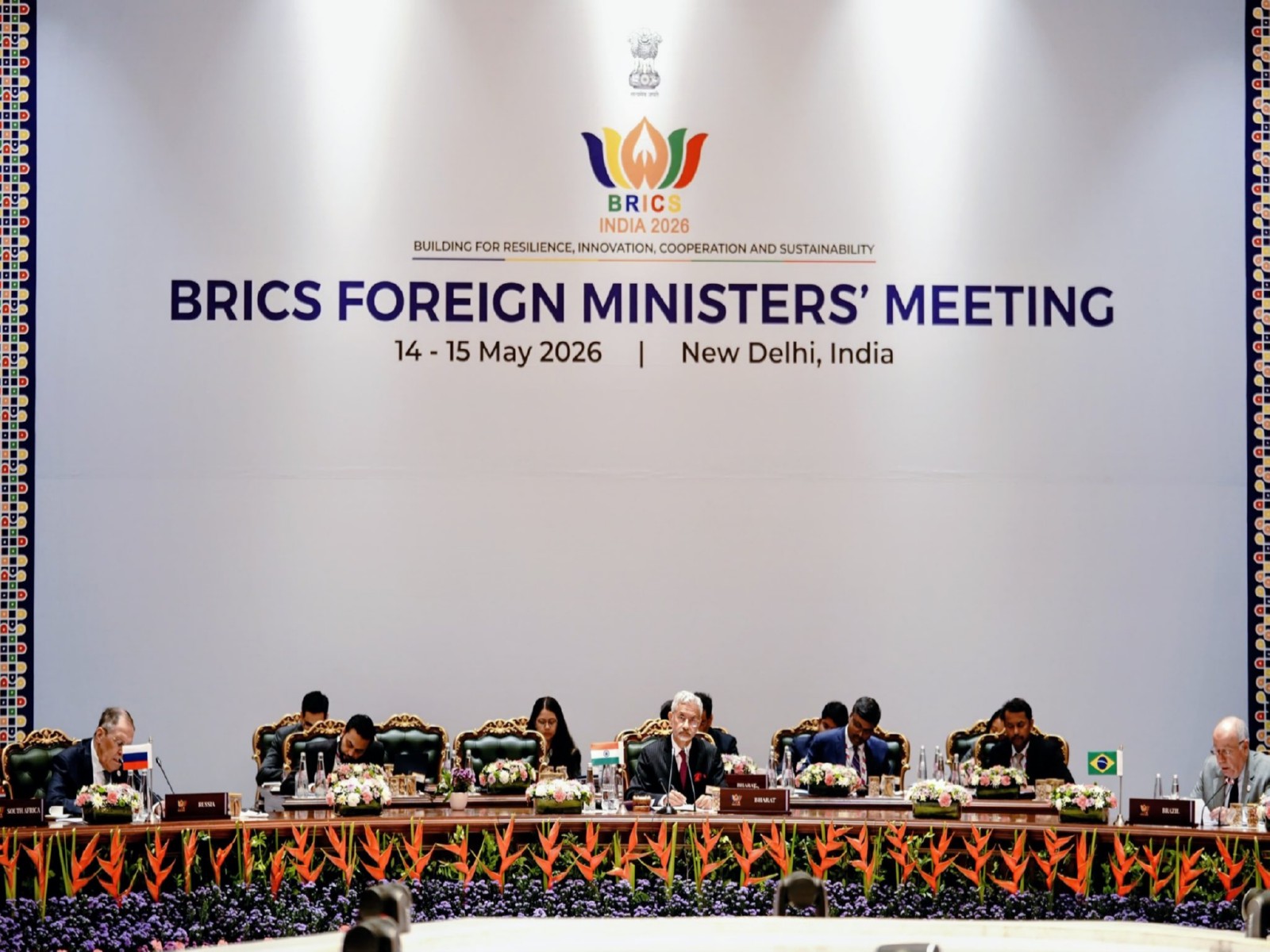
New Delhi [India], May 15 : Championing the cause of a more balanced world order, India has intensified its call for a comprehensive overhaul of global governance frameworks, asserting that stagnant multilateral structures have failed to mirror today’s geopolitical shifts.
Addressing a BRICS session dedicated to institutional transformation, India highlighted that international bodies established in a bygone era are now faltering under the weight of an interconnected and multipolar world.
India warned that the “effectiveness of global governance and the credibility of multilateralism are under increasing scrutiny,” maintaining that reform is “not a matter of choice, but of necessity.”
At the heart of India’s diplomatic intervention was a demand for the restructuring of the United Nations, specifically the UN Security Council (UNSC).
India pointed out that while the UN’s responsibilities have grown, its core decision-making remains trapped in the past. To restore the body’s “legitimacy and effectiveness,” India advocated expanding both permanent and non-permanent seats, with a particular emphasis on greater representation for Asia, Africa and Latin America.
“Without meaningful reform, the effectiveness and credibility of the UN will remain constrained,” India remarked, while urging member states to transition from rhetoric to active, text-based negotiations. Beyond political structures, India spotlighted the acute vulnerabilities facing the Global South, including fragile supply chains, energy insecurity and the financing hurdles encountered by developing states.
India called for an evolution of the international financial architecture, urging Multilateral Development Banks to become “more responsive” in mobilising climate and development finance tailored to national needs.
The critique extended to the global trading arena, where India identified risks such as “non-market practices” and “supply chain concentration.” While reaffirming its backing for a rules-based system with the World Trade Organization at its core, India insisted on reforms to ensure a fairer playing field. India emphasised that true multilateralism must become “more democratic,” “more representative” and “more effective.”
It underscored that global cooperation should be firmly anchored in sovereignty, territorial integrity and international law. Summarising the urgency of the moment, India noted that today’s crises demand faster institutional evolution.
“The message from our times is clear: Cooperation is essential. Dialogue is necessary. Reform is overdue,” India stated, pledging to work with global partners to forge a more equitable international order. (ANI)