

In a nation where every child is precious, prevention is not merely a medical policy — it is a moral responsibility
DR SUHAIL NAIK
India, as a nation, has now largely adopted the two-child family norm. Every child today is precious. We simply cannot afford to lose even a single one. For most married couples, after enduring countless ups and downs in life, the ultimate purpose of existence becomes their children. The journey of parenthood begins silently within the fallopian tube, long before the first cry of birth is heard.
Pregnancy is undoubtedly one of nature’s greatest blessings, especially in an era where infertility clinics are mushrooming across cities and towns. Yet, we must also acknowledge that pregnancy is not merely a physiological state; it is often a period filled with medical vulnerabilities.
Nausea, relentless vomiting, food aversion, gestational diabetes, pregnancy-induced hypertension, preeclampsia, eclampsia, seizures, psychosis, and cholestasis can transform the nine-month journey into an emotionally and physically exhausting ordeal.
Still, the moment a pregnancy card shows two pink lines, an indescribable wave of joy sweeps through the family. It is not merely the happiness of a couple, an entire household, or often an entire dynasty that begins dreaming together.
Thus begins the sacred journey of motherhood.
It is a journey filled with hope, anxiety, repeated hospital visits, endless ultrasonographies, and prayers whispered silently in the dark. Scan after scan is performed to confirm the site of pregnancy, rule out congenital malformations, and assess fetal well-being.
In modern times, amid growing confusion, fear, and convenience-driven choices, most pregnancies culminate in a Lower Segment Caesarean Section (LSCS), a procedure inherently associated with considerable morbidity and a small but definite mortality risk. Yet, a mother willingly embraces every needle, every scar, and every suffering for the safety of her child.
The concern of parents revolves around one central question: Where will my baby be safest? Fortunately, the Government of India has repeatedly strengthened maternal and child healthcare services, recognising them as a national priority. Millions of healthcare workers across the country continue sustaining these services every second of every day, often silently and selflessly.
During pregnancy, a mother enters a unique psychological world. She imagines names for the unborn child, dreams of tiny clothes, school admissions, birthdays, and futures yet unseen. When the months finally pass and full-term gestation is achieved, she often looks back at the difficult journey as one filled with beautiful dreams and immeasurable hope.
And then comes the defining moment of life itself.
A child leaves the safety of the womb to begin the uncertain journey toward mortality. The first breath of life becomes the first cry of birth — a cry that brings tears of joy, celebrations, sweets, and gratitude across households throughout the world.
But alongside that first cry begins the struggle for survival.
Feeding difficulties, sleepless nights, vaccinations, colics, nasal congestion, fevers, coughs, and hospital visits become a routine part of parenting. Some children, unfortunately, enter the difficult world of congenital malformations, defects, disorders, deficiencies, and diseases.
Recognising this reality, the Government of India launched the Rashtriya Bal Swasthya Karyakram (RBSK), providing assistance for children suffering from the “4 Ds” — Defects, Diseases, Deficiencies, and Developmental Delays. Such initiatives reflect the vision of policymakers who spend sleepless nights strengthening healthcare systems for the nation’s children.
After all, every new-born is a building block of the nation.
Families celebrate every milestone of childhood, the naming ceremonies, birthdays, teething, crawling, circumcision, first school days, while simultaneously battling fevers, coughs, loose motions, tantrums, breath-holding spells, thumb sucking, and endless worries. Parenting is not merely joy; it is a lifelong emotional struggle woven together with love.
Yet the greatest tragedy arrives unexpectedly.
One ordinary day, a perfectly healthy child develops fever, vomiting, abdominal pain, and jaundice. Investigations are performed, reports arrive, and suddenly the parents are told that their child is suffering from viral hepatitis, complicated by Pediatric Acute Liver Failure due to Hepatitis A.
Most of the time, Hepatitis A remains mild, self-limiting, and harmless. But occasionally, it becomes fulminant, catastrophic, and life-threatening. Every passing minute becomes unpredictable.
Parents are informed that the child may require liver transplantation — a service available only at a few specialised centres in the country. The devastated father is further told that the child is too critical for routine transport and may require an air ambulance.
The cost of transportation, transplantation, prolonged intensive care, and post-transplant management is unimaginably high. Families sell land, jewellery, homes, and dignity. Social media fundraising begins. Charity, Zakat, Ushr, and donations are sought desperately.
And despite all this, the policies of many corporate hospitals remain brutally straightforward: whether the child survives or dies, the bill must be cleared before leaving the hospital premises.
Such tragedies are neither rare nor isolated. Across Kashmir and the rest of India, many children continue to lose their lives to this preventable disease.
That is the painful truth.
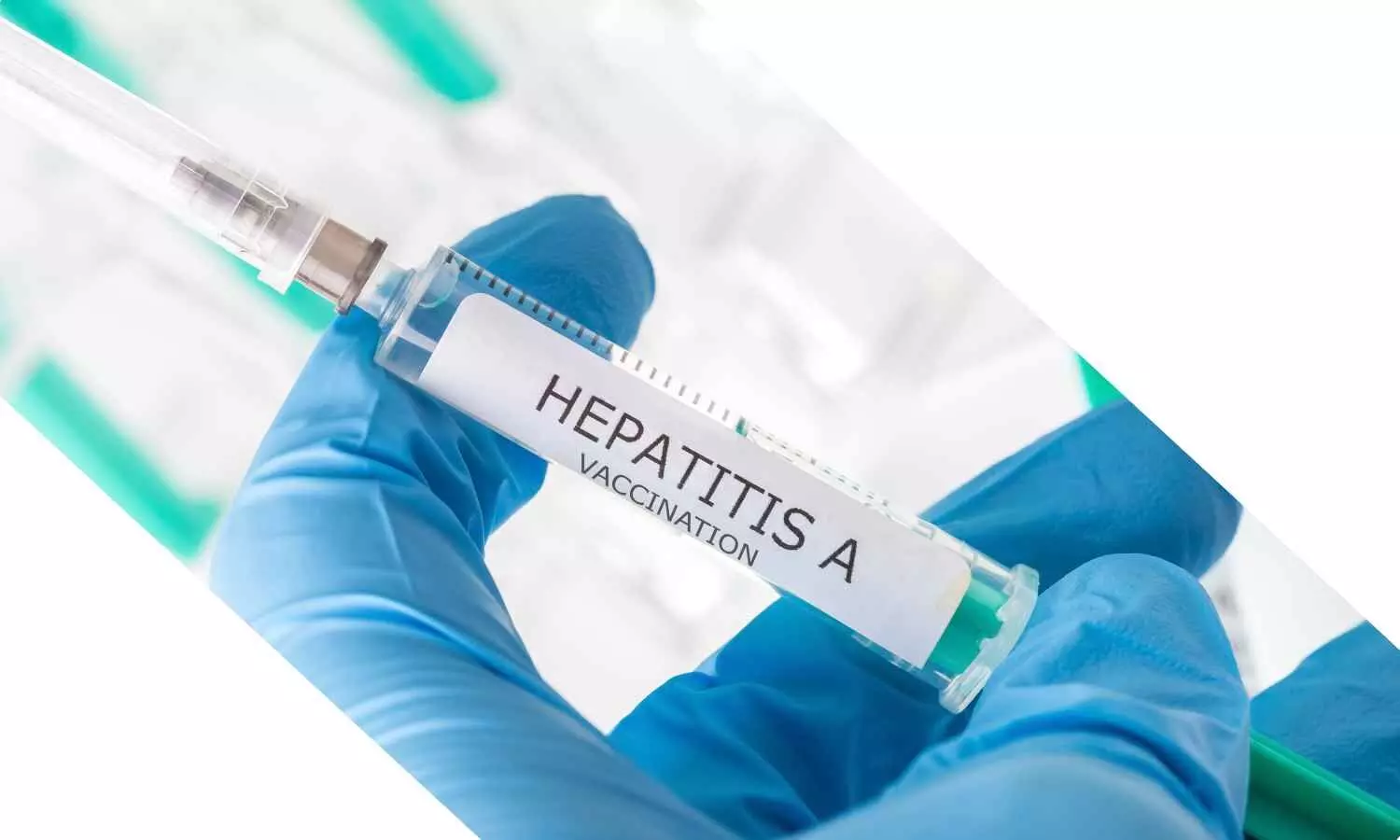
A life-threatening condition like Pediatric Acute Liver Failure due to Hepatitis A can often be effectively prevented by just two doses of Hepatitis A vaccine given six months apart.
During this endless corridor of agony, helplessness, and heartbreak, the most devastating moment comes when shattered parents are told that this horrifying illness — pediatric acute liver failure — could, in many cases, have been prevented by just two small injections of the Hepatitis A vaccine.
At that moment, the world around them collapses. The parents who were praying day and night outside intensive care units, watching monitors beep, watching needles pierce the tiny hands of their child, suddenly realise that all this suffering perhaps never had to happen. The thought tortures them endlessly — “If only we had known earlier… if only someone had told us… if only those two injections had been given in time.”
No words can describe the pain of a mother watching her once playful child lying unconscious on a hospital bed, or the silent tears of a father trying to stay strong while his entire world slips through his trembling hands. The disease attacks not only the liver of the child, but the soul of the entire family. Homes fall silent, prayers become desperate, and every second feels like a battle between hope and death.
And when all this devastation is linked to a preventable disease, the tragedy becomes even more unbearable. In today’s India, where most families dream of one or two precious children after years of struggle, infertility, sacrifices, and prayers, losing even a single child is not merely a medical event — it is the destruction of an entire universe for that family.
This is not fiction. This is happening in Kashmir. This is happening across India. And many children are still dying. Then arrives the most heartbreaking moment of all.
In the middle of this endless corridor of agony, helplessness, and shattered hope, parents are told something that destroys them emotionally:
“This illness could often have been prevented by just two doses of Hepatitis A vaccine.”
Two injections.
That is all.
At that moment, the world around them collapses completely.
Parents who spent sleepless nights outside ICUs begin torturing themselves with a single unbearable thought:
“If only we had known earlier…”
“If only someone had told us…”
“If only those two injections had been given…”
No pain in medicine compares to the sight of a mother watching her once playful child lying motionless on a hospital bed. No language can describe the silent tears of a father whose entire world is slipping away through trembling fingers.
Pediatric Acute Liver Failure does not merely damage the liver of a child — it destroys the emotional soul of an entire family.
Homes fall silent. Birthdays become memories. School bags remain untouched. Toys gather dust. And parents spend the rest of their lives wondering whether their child could have been saved.
What makes this tragedy even more unbearable is that it is often preventable.
In today’s India, where families dream of one or two precious children after years of struggle, infertility treatments, sacrifices, prayers, and emotional battles, losing even a single child is not merely a medical event.
It is the destruction of an entire universe.
Vaccines have already changed human history. Diseases that once killed millions are now preventable because societies chose prevention over regret. The success of HPV vaccination in preventing cervical cancer stands as a shining example of how modern medicine can save lives long before tragedy strikes.
Hepatitis A vaccination deserves the same seriousness.
Paediatricians across the nation must collectively urge the Government of India, the Ministry of Health and Family Welfare, and NITI Aayog to consider broader inclusion of Hepatitis A vaccination in public immunisation strategies.
Until that becomes a universal reality, every family that can afford the vaccine should ensure their children receive it.
Simultaneously, NGOs, charitable organisations, philanthropists, religious institutions, and welfare groups must help vaccinate children from poor and vulnerable families.
Because no parent should ever have to bury a child from a disease that medicine already knows how to prevent.
And because in a nation where every child is precious, prevention is not merely a medical policy — it is a moral responsibility.
We have already witnessed how vaccines transformed the fate of countless diseases. Cervical cancer prevention through HPV vaccination stands as another shining example of preventive medicine saving lives before tragedy strikes.
It is now time for a collective national awakening.
Paediatricians across the country must strongly urge the Government of India, the Ministry of Health and Family Welfare, and NITI Aayog to consider incorporating Hepatitis A vaccination into broader public immunisation strategies. Until that becomes a universal reality, every family that can afford the vaccine must ensure that their children receive it.
Simultaneously, NGOs, charitable organisations, philanthropists, and welfare groups should channel a portion of their resources toward vaccinating children from poor and deserving families.
Because no parent should ever watch a child die from a disease that medicine already knows how to prevent. And because in a nation where every child is precious, prevention is not merely a medical strategy — it is a moral responsibility.
(The author is a Senior Consultant and Assistant Professor, Department of Paediatrics, GMC Srinagar and has 50 research publications in paediatric neurology)