

True progress lies in flying high into the modern world while remaining deeply rooted in the values, empathy, and sanity that once defined us
SYED NISSAR H GILANI
Observing the unsettling events that unfold in Kashmir day in and day out has become deeply disheartening. At this stage of my life, witnessing such a rapid shift in our societal fabric brings a profound sense of sadness—and, at times, despair. Never in my childhood, nor even in the middle decades of my life, could I have anticipated the kind of incidents we read about today.
In the days of my youth, our relationship with our surroundings was deeply spiritual and intuitive. I vividly remember how even a small, unusual brown cloud in the sky would prompt our elders to sense that something tragic had occurred somewhere. Their reaction was not panic, but a gentle advisory to the household to remain calm, reflective, and deeply invested in prayer, asking the Almighty to be kind to everyone. We navigated those uncertain moments through a collective shield of quietude, respect for nature, and faith.
Today, the headlines are dominated by a starkly different reality: murders, suicides, financial scams, rising divorce rates, and delayed marriages. It forces one to wonder where we are heading.
This stands in sharp contrast to the Kashmir I grew up in, where women played an active, vibrant, and foundational role in sustaining both the economy and the spirit of our communities.
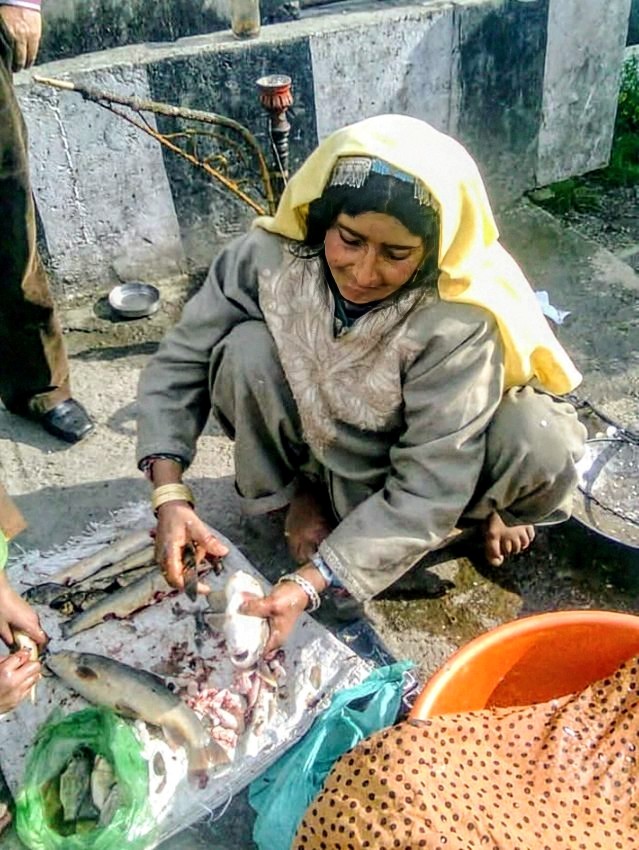
In the heart of our markets and neighbourhoods, women from the fisher community were a constant, hardworking presence. They traversed the valley selling fresh fish, often supplementing their baskets with native water products like nadru (lotus stems) and water chestnuts. In the summer, they brought seasonal makai (corn)—both roasted on a tawa and baked to perfection—to the delight of passersby.
The mornings were a sensory treat, defined by the rich aroma of local, homemade masala pounded with aromatic spices, paired with fresh lavasa bread straight from the tandoor. On Fridays, the atmosphere around sacred spaces like the Hazratbal Shrine and the Jamia Masjid was transformed by the entrepreneurial spirit of our women. They would gather to sell fresh cottage butter, traditional cheese, and during the peak of summer, baskets of sweet, dark mulberries.
In the domestic sphere, our women were indispensable partners to their menfolk, lending their hands to every traditional craft.
City families would participate in phumb kutoun—the meticulous art of spinning fine pashmina thread on local charkhas—to earn an honest, dignified living. In rural areas, women were the backbone of the agrarian economy, working shoulder-to-shoulder with their families in the open fields, weaving kangris, crafting willow baskets, and weaving mats. They managed thriving households, raising chickens to ensure a steady supply of fresh poultry, while a vibrant backyard vegetable garden was the standard for every home.
Their labour was often physically demanding, including the arduous task of collecting firewood from deep forests. Yet, despite—or perhaps because of—this rigorous, active lifestyle and their reliance on natural herbs and simple homemade remedies, they led robust lives. The myriad lifestyle diseases we see our women suffering from today were virtually nonexistent. I observed during my years in service that women were in full command of the granaries and the kitchens. They were the trusted custodians of the harvest, carefully storing dry fruits like walnuts and almonds, celebrating the fruits of their labour alongside the men in colourful, joyous community events.
Today, an absolute transformation has taken place. We now see our young generation of women working confidently at gas stations, managing commercial outlets, and running ultra-modern beauty parlours. It is a striking cultural shift—moving from the days of dandasa (walnut bark), which our mothers used as a natural preparation to clean their teeth, to the modern luxuries of pedicures and threading that previous generations were entirely unaware of.
On a recent visit to a commercial bank in Shahr-e-Khaas, I was filled with pride to see the entire branch, including the Branch Manager, managed by a team of dedicated, highly professional ladies. Similarly, during my recent travels, I have boarded flights operated by capable, modern crews, reflecting a very positive outlook on what our present generation can achieve.
Yet, this undeniable progress brings with it a profound paradox. While we celebrate these new heights, we must ask ourselves: at what cost? In the rush toward modernity, the core essence of our cultural values and traditions must not be cast aside.
It breaks the heart to see the current state of our society. Our daughters should not be found wandering the banks of the Jhelum, desperately searching for a soft spot to jump into the river to end their precious lives.
Our youth possess immense potential; they should be striving for lifetime achievements in science, arts, humanities, and trade. They should not be losing themselves to the menace of drug addiction, the tragedy of running away from homes, violence, or street vandalism. Even on our roads, the reckless disregard for traffic rules risks not only their own lives but the lives of innocent citizens.
We must welcome the winds of change and celebrate the empowerment of our youth, but never at the expense of our souls. True progress lies in flying high into the modern world while remaining deeply rooted in the values, empathy, and sanity that once defined us.
(The author is a former civil servant from the administrative service. He can be reached at: nisargilani57748@gmail.com )