

Says Census 2027 carries special significance for J&K
Urges citizens to fulfil civic duty
RK News Service
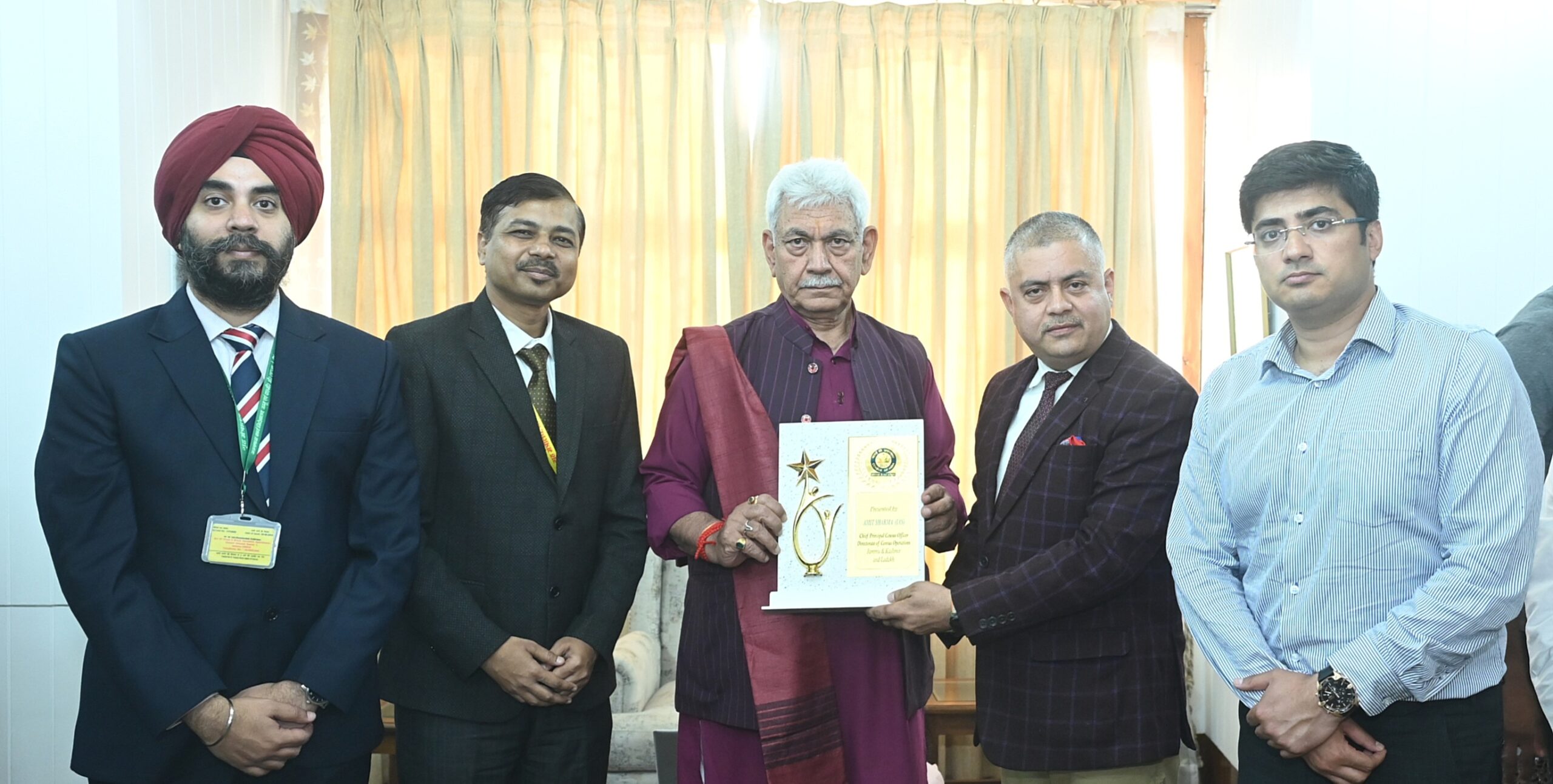
Srinagar, May 17: Lieutenant Governor Manoj Sinha completed his self-enumeration on Sunday, marking the beginning of the House listing and Housing Census (HLO) operations in the Union Territory of Jammu and Kashmir.
The Census 2027 assumes historic significance, being India’s first fully digital and paperless Census integrating advanced digital technologies, mobile-based data collection systems, and self-enumeration mechanisms.
The Lieutenant Governor said the exercise is aimed at ensuring greater efficiency, transparency, accuracy, and real-time monitoring of operations. “Census 2027 carries special significance for the UT in view of urban expansion, migration trends, expansion of municipal jurisdictions, and evolving developmental priorities. It will generate reliable and granular datasets essential for evidence-based governance, targeted welfare delivery, and long-term planning,” he said.
The Self-Enumeration period from May 17 to May 31, 2026, will collect information regarding housing conditions, household assets, amenities and facilities, access to sanitation and drinking water, type of construction, communication and transport facilities, and availability of electricity and internet.
The second phase, Population Enumeration, will be conducted in February 2027 in normal areas, while snow-bound and non-synchronous areas of Jammu and Kashmir will be covered earlier in September 2027. This phase will collect demographic and socio-economic information relating to population, age, gender, literacy, occupation, migration, marital status, disability, fertility, and other demographic indicators.
More than 27,000 field functionaries, including Enumerators and Supervisors, are being deployed across Jammu and Kashmir, with their registration and digital integration being undertaken through the Census Management and Monitoring System (CMMS). QR-coded appointment letters and identity cards are also being generated through the digital platform.
A comprehensive multi-tier training framework has been put in place. National Trainers have trained Master Trainers, who subsequently conducted training of Field Trainers across districts. Training programmes for Enumerators and Supervisors are being organised in phased batches covering Census concepts, field protocols, mobile-based applications, digital data capture systems, household engagement techniques, and data confidentiality provisions.
Special operational planning is being undertaken for remote, hilly, and snow-bound areas of Jammu and Kashmir to ensure the timely completion of Census activities under challenging geographical and climatic conditions, with separate operational arrangements, logistics planning, and deployment strategies.
A robust multi-layered digital security architecture has been established to safeguard the integrity and confidentiality of data at every stage, including end-to-end encryption, secure digital transmission protocols, protected data storage systems, role-based access controls, and certified data centres designated as Critical Information Infrastructure.
Self-Enumeration represents one of the most important and citizen-centric innovations in Census 2027 and is expected to transform public participation in the Census process, allowing households to directly submit their Census information digitally through a secure online portal during the notified period.