All J&K Shia Association Holds Press Conference on Muharram Preparedness
-
 RK Online Desk
- Comments 0
- 06 May 2026
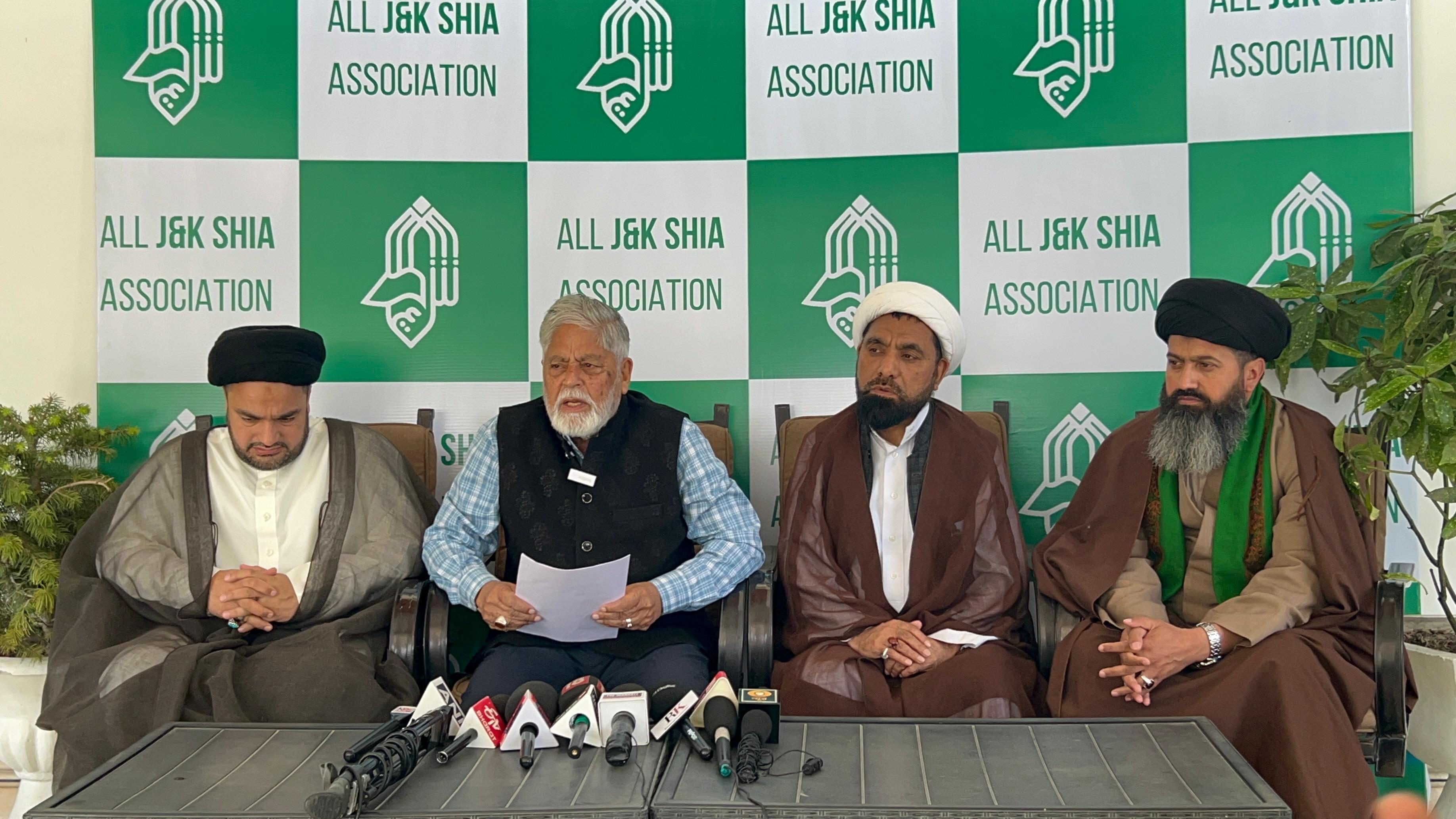
Srinagar, May 6: The All J&K Shia Association today held a press conference at Darul Jawad, Qamawari addressing what it described as the continued and systematic exclusion of the Shia community in the run-up to Muharram.
Speaking to the media, General Secretary Abid Hussain Ansari raised a series of concerns regarding administrative neglect, lack of planning, and absence of basic facilities during one of the most significant religious periods for the community.
At the outset, he emphasized that Muharram is not confined to a single day but spans two full months, Muharram and Safar. He noted that every year, administrative action begins too late, leaving little time for meaningful implementation. He stressed that this recurring delay reflects a lack of understanding among stakeholders and called for timely planning well in advance.
Highlighting financial constraints, he pointed out that there is no dedicated budget allocated for Muharram. Most arrangements are left to local efforts, and even when approvals are granted, the tendering process takes several weeks, rendering the efforts ineffective by the time implementation begins. He urged authorities to release funds in advance to ensure timely execution of necessary works.
On the issue of ration supply, he stated that requests for additional food grains during Shab arrangements are routinely denied. Officials cite limitations in quota and lack of funds, resulting in no provision for essential items such as sugar, flour, and kerosene. He emphasized that with thousands of people being served during Muharram, such support is both reasonable and necessary.
Addressing infrastructure concerns, he revealed that between 10,000 to 15,000 street lights across various areas are non-functional. Following recent recabling of power lines, many lights have stopped working, and despite assurances last year regarding installation of junctions, no action has been taken. He called for immediate restoration of street lighting before Muharram.
He further highlighted the poor condition of roads, stating that while new constructions are not being demanded, existing roads must at least be made passable. He specifically mentioned the deteriorating condition of the Ashura route in Ahmedpora and urged authorities to carry out necessary patchwork without delay.
On healthcare preparedness, he expressed serious concern over inadequate medical arrangements. He noted that available resources are quickly exhausted, forcing reliance on NGOs. He called for deployment of AED machines, availability of small ambulances for narrow lanes, and sufficient medical personnel. He also pointed out that the overlap with the Amarnath Yatra leads to diversion of medical staff, leaving Muharram gatherings underserved.
The General Secretary also raised the issue of lack of recognition in public infrastructure, stating that despite installation of directional signage across Srinagar, none indicate routes to key Imambargahs, including Imambara Zadibal. He termed this omission as reflective of systemic neglect.
He also flagged inaccuracies in official records and signage, citing the incorrect naming of Masjid-e-Ali as “Masjid-e-Aali,” and called for immediate rectification.
In Hanjiwera, Pattan, he pointed out that residents continue to face a lack of drinking water, describing it as a fundamental issue requiring urgent attention.
Detailing district-wise concerns, he highlighted pending works in Budgam, including issues at Imambargah Mokhdam in Mohalla Harda Panzoo, boundary wall improvements at Imambara Ichgam, and construction of a drainage lane connecting Masjid Mohammadiya to Imambara Ichgam.
In Baramulla, he cited the need for repairs on the Ahmedpora–Magam link road, inner roads in Matipora, and the road connecting Bonichakal and Jeel Bund in Habak village, Baliheran.
In Srinagar, he noted that macadamisation at Mohsin Abad, Bemina has been pending for three years. He also called for blacktopping of the Ashura procession route in Zadibal and repair of internal lanes and drainage around Imambargah Hassanabad.
Referring to a park near Imambara Zadibal, he stated that fencing work promised before the 7th of Muharram last year remains incomplete. He further revealed that upon approaching the office, the Joint Commissioner Works SMC told that they should have repeatedly visited his office to get the work done and admitted inability to locate the submitted file, raising serious concerns about administrative accountability.
He also criticized the functioning of the PHE department, stating that the SE PHE appears to act more as a political spokesperson than a government employee. He noted that a proposal submitted last year for installation of a water tank with a submersible pump at Imambargah Zadibal remains unaddressed despite four formal communications.
In Bandipora, he mentioned pending macadamisation of the inner link road at Shahtulpora and the need for blacktopping the road from Ansari Complex to Wani Mohalla in Shadipora.
Raising the issue of Madin Sahib Shrine, he questioned why it remains closed and suggested that if the administration is unable to manage it, it should be handed over to the Waqf Board to ensure its proper functioning.
He asserted that these concerns reflect the ground reality, stating that little meaningful work is carried out during Muharram, with most efforts being limited to optics rather than substantive action.
He also called for introspection within the community, noting that while significant funds can be mobilized for external causes, the same capacity exists to address local needs. However, he emphasized that such responsibilities should not fall solely on the community, as these are matters of public entitlement and governance, and the government needs to allocate a budget since we are taxpayers.
Concluding the press conference, he urged both the Lieutenant Governor and the elected government to allocate a dedicated budget for Muharram, engage with stakeholders at the grassroots level to assess actual requirements, and ensure that all necessary arrangements are completed by the end of May.
He cautioned that if timely action is not ensured, the administration should refrain from last-minute, optics-driven measures and instead the community will take responsibility and manage the arrangements independently.
The All J&K Shia Association reiterated that its demands are not extraordinary but pertain to basic necessities such as lighting, roads, water, food, and medical care, calling for planning, accountability, and equitable treatment, and also reaffirmed its commitment to bring community issues into limelight and stand by the community wherever needed.
Related Posts
-

CM Omar Abdullah rolls out ₹84.41 crore multi-sector development works to transform Ganderbal
-

risingkashmirtesting
-

Srinagar Police Register Cases Against Srinagar MP, Ex-Mayor for Circulation of Misleading Online Content
-

Mehbooba Mufti criticises Centre for not condemning killing of Khamenei; burns Netanyahu, Trump posters
-

Uri farmers oppose new water supply scheme
-

All Schools, Colleges to remain closed for two days in Kashmir: Sakina Itoo
-

Flames On The Hills: Dry spell drives wave of forest fires across Valley
-

MeT Predicts Light Rain, Snow in J&K's Higher Reaches Till March 9
-

“God saved me”: Farooq Abdullah after escaping assassination attempt in Jammu
-

Mirwaiz Welcomes SC’s Bail Decision for Shabir Shah, Seeks Relief for Other J&K Political Prisoners
-

Mirwaiz Slams Govt Over Jamia Masjid Shutdown on last Friday of Ramzan, Draws Parallel with Al-Aqsa
-

CM Omar throws open Asia’s largest Tulip Garden in Srinagar
-

MeT Predicts Light Rain, Snow in J&K’s Higher Reaches Till March 20
-

Mughal Road Closed Following Fresh Snowfall at Pir Ki Gali
-

MeT Predicts Rain, Snow in J&K’s Higher Reaches

Leave a comment