

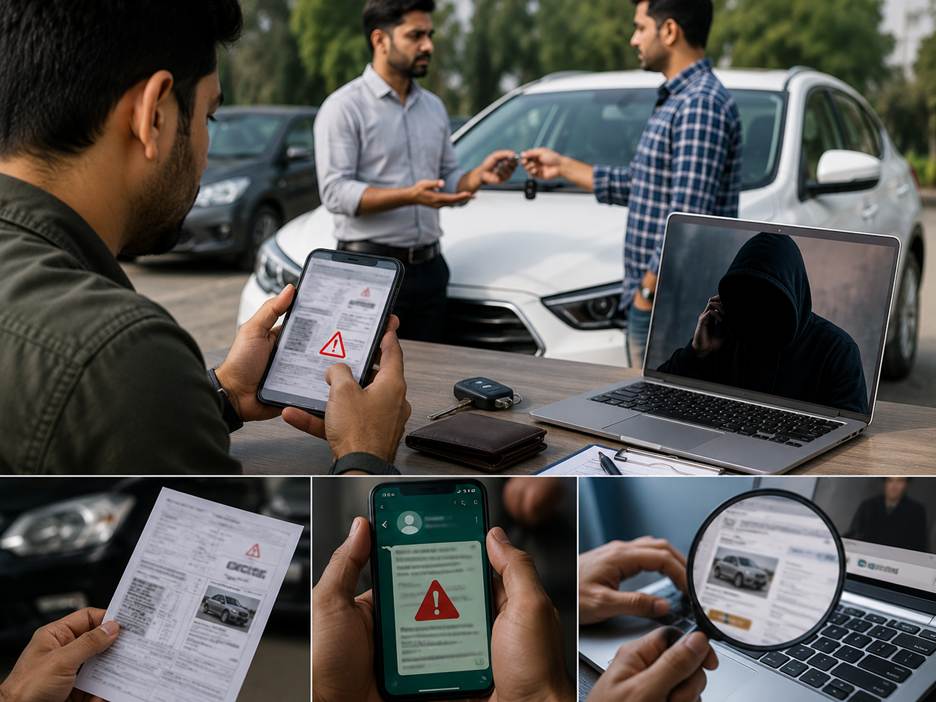
Uttar Pradesh has one of the largest used car markets in India, with significant transaction volumes in cities like Lucknow, Kanpur, Agra, Varanasi, and across hundreds of smaller towns connected by a road network that includes some of the country’s busiest national highways. This scale creates both opportunity and risk, and one of the more specific risks that has emerged in recent years is the fake challan scam, which has been reported with enough frequency in UP to warrant serious attention from anyone buying or selling a used car in the state.
How the Scam Works
Here’s how the scam typically works. A buyer is in the process of negotiating a used car purchase from a private seller. At some point before or during the transaction, the buyer receives an SMS or WhatsApp message claiming to be from “UP Traffic Police” or a state enforcement agency, stating that the vehicle in question has a large pending challan, sometimes in the range of ₹15,000 to ₹50,000, and that immediate payment is required to avoid seizure or additional penalties. The message includes a link or a UPI ID for payment.
In some variations, the scam targets the seller, a message arrives claiming they must clear challans before the vehicle can be transferred, with a fraudulent payment link provided for “fast clearance.” In either case, the money paid goes to a fraudster, not to any government authority, and the “challan” doesn’t exist in the official system.
Knowing how to identify a traffic challan scam notification from a genuine one, and understanding what a legitimate UP traffic challan verification actually looks like, is the practical protection this market needs.
How to Spot and Verify
Spotting these messages requires knowing a few things about how legitimate e-challan communications actually work. Authentic challan notifications in India are sent via officially registered government short codes, they don’t come from personal mobile numbers, WhatsApp accounts, or generic email addresses. Payment links in genuine communications direct you to government portals (parivahan.gov.in, state traffic police websites with .gov.in domains), not to third-party payment apps or unfamiliar URLs. No legitimate challan authority asks for payment via direct UPI to a personal ID.
The safest approach is to verify independently. If you receive any notification about a challan on a vehicle you’re considering purchasing, check the traffic challan scam awareness resources and then verify the vehicle’s challan status directly through the official Parivahan portal or the state’s official traffic challan system. If the challan exists, you’ll find it there. If it doesn’t appear on the official system, the message was fraudulent.
Understanding the UP traffic challan ecosystem is useful for anyone transacting in the state. UP has genuine, active enforcement, the state has deployed cameras on NH-19, NH-27, the Agra-Lucknow Expressway, and the Yamuna Expressway, among others, and legitimate challans do get issued. The point is not that challans don’t exist; it’s that verifying them through official channels takes the same two minutes as falling for a scam, and protects you completely.
For buyers and sellers in UP’s used car market, the general rule is straightforward: never make any payment related to challans through a link received in a message. Always navigate directly to the official portal yourself, look up the vehicle by registration number, and pay only through that system if dues are confirmed. The challan number, issuing authority, and payment receipt will all be visible and verifiable in the official system.
Being alert to this specific scam type doesn’t mean approaching every used car transaction with suspicion, it means bringing the same practical verification habits to the transaction that any informed buyer should already be using.
The sophistication of these scams has increased. Some operate via convincing-looking WhatsApp messages with official-appearing graphics and even what appear to be challan case numbers. The case numbers are fabricated but look plausible enough to cause concern, particularly if the recipient is unfamiliar with what legitimate challan formats actually look like. Legitimate e-challans issued by UP traffic authorities include specific data fields, GPS coordinates of the violation, a photograph of the vehicle at the moment of violation, and the issuing officer’s identification, none of which appear in fake notifications.
For buyers in UP’s used car market, the best defence is a verification-first mindset. Any claim about a challan, regardless of how convincing the notification looks, should be verified through the official Parivahan portal or the UP traffic police website directly. Navigate there yourself, never through a link received in a message. If the challan exists in the official system, you will find it. If it doesn’t appear there, it doesn’t exist.
Genuine challans issued against a vehicle’s registration in UP are also accessible through the national-level check tool, which provides a full history of violations linked to the registration number.