

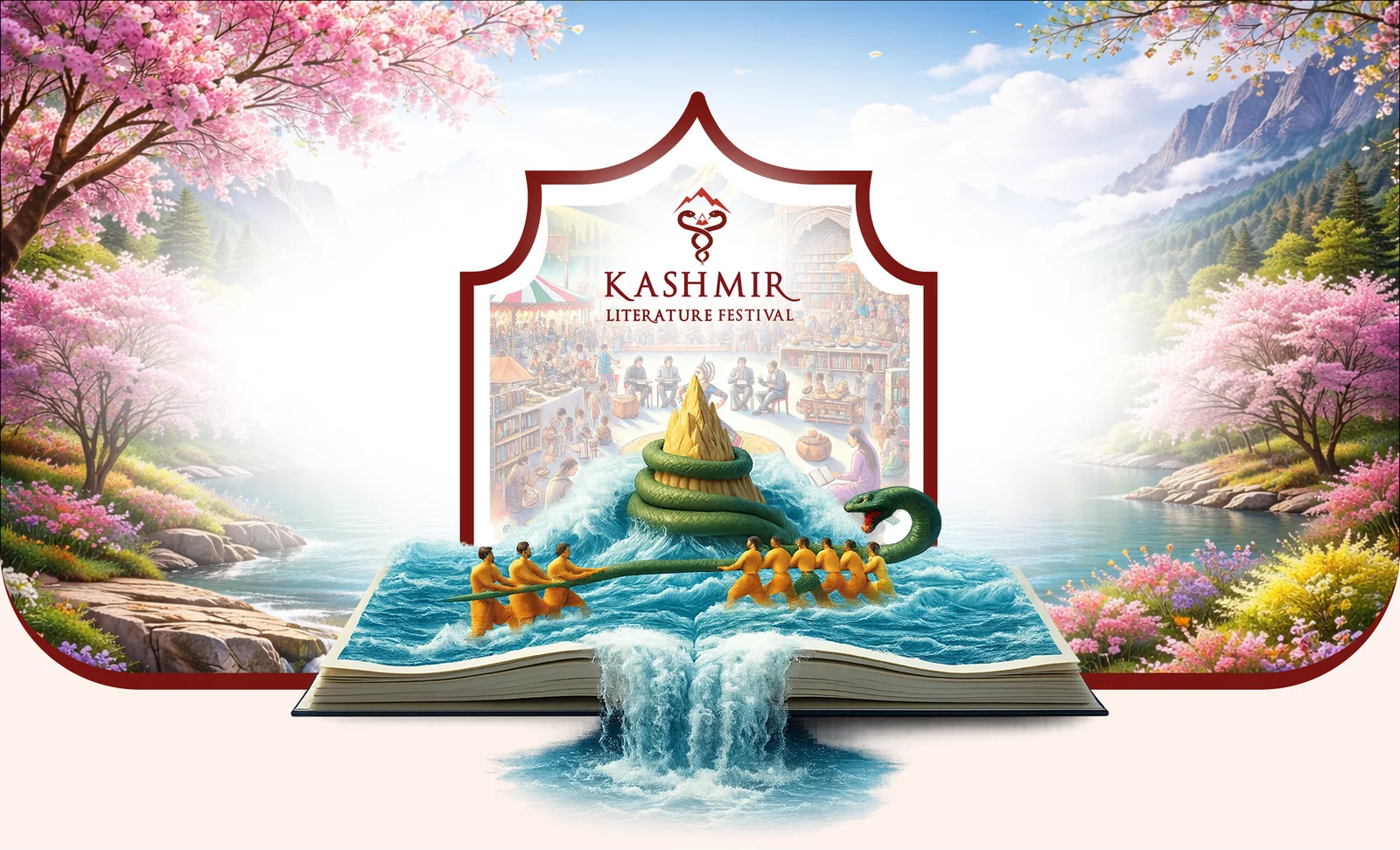
On 30th and 31st May at SKICC, literature, music, poetry and art will once again flow together
BHAT MUSADDIQ REYAZ
The 3rd Edition of the Kashmir Literature Festival, on the banks of Dal Lake under the lapse of the Himalayas, is once again bringing together literature, art, music, culture and voices from diverse faiths to revive and celebrate Kashmir’s centuries-old cultural identity.
With its 3rd edition, Kashmir Literature is inviting speakers, writers, artists and intellectuals from across India — from Gujarat to Manipur, Kashmir to Kanyakumari not only to participate in a literature festival, but to reconnect with the spirit, warmth and hospitality of Kashmir.
Kashmir’s literary tradition is nearly 700–800 years old and has always been deeply connected with the identity of the Valley. For centuries, it preserved our language, folklore, spiritual traditions, ethics, poetry, music and collective memory. Literature in Kashmir was never limited to books alone — it lived through shruks, vakhs, folk songs, storytelling gatherings, weddings and everyday life.
Before the late 1980s, Kashmir had a vibrant cultural atmosphere. Mehfils, Rouf, theatre, storytelling and cinema culture were an important part of Kashmiri social life. People from different districts would travel to Srinagar to watch newly released films, especially Bollywood movies. Cinema halls were not merely places of entertainment —they were spaces where families spent evenings together, celebrated happiness and shared common experiences.
As terrorism and violence grew in Kashmir during the late 1980s and 1990s, many of these cultural spaces became the first targets. The loss of cinemas reflected a much deeper cultural loss. Public spaces for literature, theatre, debate, music and artistic expression slowly disappeared under fear and uncertainty. An entire generation grew up without experiencing the cultural life earlier Kashmiris once knew.
Many artists, poets and intellectuals suffered during those difficult years. Ghulam Mohammad Bhat, popularly known as Ghulam Nabi Bulbul, a respected folk singer, was killed in 1990. Poet and scholar Sarwanand Koul Premi was abducted and killed along with his son the same year. Theatre artists, writers and musicians faced threats, displacement and fear. Even celebrated artists like Raj Begum carried forward Kashmiri music during years when public performances had become difficult.
Educational institutions also suffered heavily. During different phases of terrorism, schools remained shut because of violence, fear and enforced strikes. In 2016 alone more than 30 schools were reportedly damaged or burned within a few months of cross border sponsored unrest. The conflict did not only affect security and politics — it deeply affected Kashmir’s intellectual and cultural foundations.
Terrorism did not only attack the sovereignty of India time and again; in Kashmir, it also attacked the roots of literature, Sufi culture, music, art and history, pushing the Valley into years of darkness and silence.
In recent years, especially after the abrogation of Article 370, efforts have been made to restore Kashmir’s cultural spaces and reconnect the younger generation with the Kashmir that existed before the years of violence. New cinemas, entertainment spaces, public events and cultural initiatives are slowly reviving the atmosphere that once defined the Valley. Organisations like Srikula Foundation are playing an important role in restoring Kashmir’s oldest literary and cultural traditions.
On 30th and 31st May at SKICC, literature, music, poetry and art will once again flow together. More than a festival, KLF is becoming a space for healing, dialogue and literature revival, a reminder that Kashmir’s identity has always been rooted in knowledge, creativity, spirituality and coexistence.