

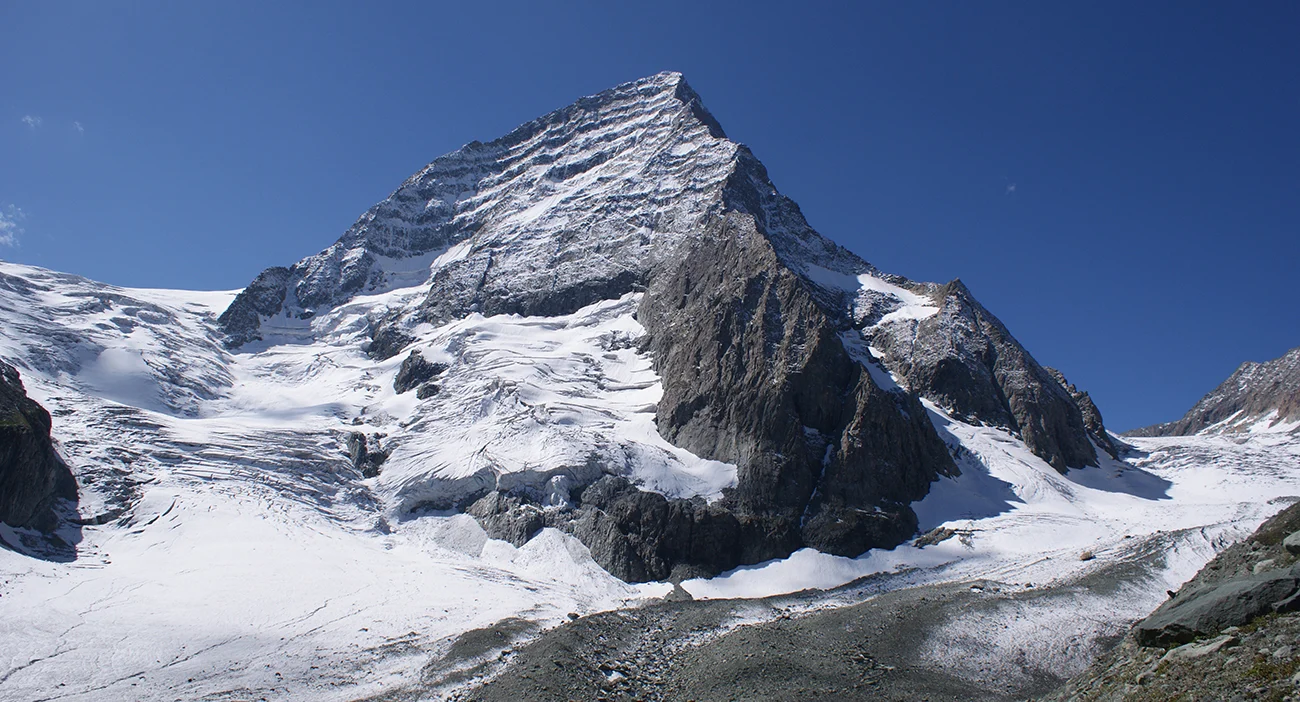
KU research reveals rapid glacier retreat across Himalayas; ‘deep climatic disturbance’ underway, warn scientists
STUDY HIGHLIGHTS
- 70% glaciers could disappear by 2100
- Small, low-altitude glaciers most vulnerable
- Kolahoi glacier – Kashmir’s ‘water tower’ – retreating
- Erratic snowfall, rising temperatures driving melt
- 122 glaciers in Pir Panjal range shrank in 40 years
- Snowfields fragmenting, rocky terrain expanding
- Silent collapse may be irreversible
Abid Bashir
Srinagar, May 18: A study conducted by researchers from the University of Kashmir (KU) has warned that nearly 70 per cent of glaciers across Jammu, Kashmir and Ladakh could disappear by the end of this century if current climate trends continue, raising fears of a major ecological transformation in the Himalayan region.
The study and related glacier research by Kashmir University scientists found that glaciers across the Kashmir Himalayas are retreating rapidly due to rising temperatures, erratic snowfall and changing climatic conditions linked to global warming.
Researchers observed significant recession in all nine major glaciers studied through satellite imagery and glacier terminus mapping, while another glacier inventory study documented shrinkage among 122 glaciers in the Pir Panjal range over the past four decades.
According to the study, smaller low-altitude glaciers are the most vulnerable and may disappear entirely in the coming decades if warming trends continue.
“The glaciers are showing clear signs of accelerated retreat,” the study noted, warning that glacier loss is reshaping high-altitude Himalayan landscapes across Kashmir.
The University of Kashmir research observed expanding rocky terrain, fragmented snowfields and visible retreat in glacier boundaries in several upper catchments, indicating rapid environmental changes underway in the mountains.
Scientists associated with the study said glaciers function as natural freshwater reserves and climate regulators for the Himalayan ecosystem.
“The retreat of glaciers points towards a deeper climatic disturbance in the Himalayas,” researchers noted in the study.
The study also highlighted concerns over the long-term impact of glacier recession on mountain ecology, river systems and environmental stability in the region.
Among the glaciers witnessing visible retreat is the famous Kolahoi glacier, often referred to by researchers as Kashmir’s “water tower.”
Environmental experts familiar with the study said glacier recession remains one of the most serious but under-discussed climate threats facing the Himalayas because the crisis unfolds gradually and often escapes immediate public attention.
“The dangerous aspect is that glacier collapse happens silently,” an environmental researcher said while referring to the findings of the University study. “By the time the consequences become fully visible, much of the damage may already be irreversible.”
The researchers urged stronger glacier monitoring systems, climate adaptation strategies and protection of ecologically fragile Himalayan regions from unregulated developmental activities.
The study warned that if current warming patterns continue, future generations may inherit the Himalayas vastly different from the snow-covered mountains that historically defined Kashmir’s landscape.