

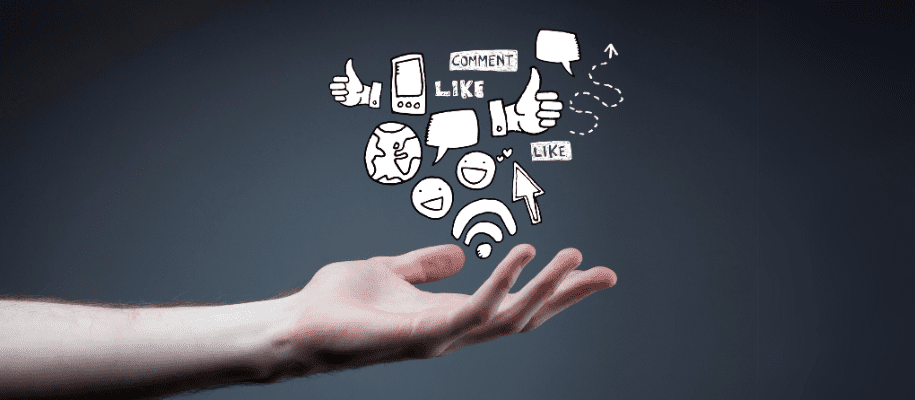
In an age of instant sharing, anonymous outrage and digital addiction, social media must become a tool of awareness, dignity and accountability rather than harm
DR RASHID SLAEEM SHAW
Social media has transformed the way societies communicate, debate, celebrate and grieve. It has broken barriers of distance, democratized expression and given ordinary people a platform once reserved for institutions and elites. A student in a remote village can now voice an opinion to the world; a local business can find customers beyond its neighbourhood; a humanitarian appeal can gather support in minutes. In many ways, social media has become the modern public square.
Yet, like every powerful instrument, it reflects the character of those who use it. When guided by responsibility, it can inform and connect. When driven by impulse, malice or manipulation, it can divide, distort and destroy. The urgent question before us is not whether social media is good or bad in itself. The real question is whether society is prepared to use it responsibly.
This issue has become more pressing than ever. Across the world, researchers and policymakers are warning that unregulated and excessive social media use is linked to serious concerns ranging from misinformation and cyberbullying to privacy violations and declining mental well-being. Recent studies have found that problematic or excessive social media use among adolescents is associated with higher levels of anxiety, depression and stress. Such findings should concern every parent, teacher and policymaker.
One of the gravest dangers of irresponsible social media use is the unchecked spread of misinformation. False claims, doctored images, misleading headlines, and now AI-generated content can travel faster than verified facts. Research has shown that social media remains a major channel for the circulation of misleading and manipulative content, with serious consequences for public trust and democratic discourse. In a society already burdened by polarisation and suspicion, the viral spread of falsehoods can inflame tensions, damage reputations and distort public understanding.
The culture of instant reaction has also weakened civility. Social media often rewards outrage over reflection, speed over accuracy and visibility over responsibility. People share content without reading it fully, comment without understanding context and attack others under the cover of distance or anonymity.
In such an environment, abuse becomes easy, and empathy becomes scarce. Cyberbullying, online harassment and public shaming have emerged as routine features of the digital experience, especially for young people. Survey data continues to show that a significant number of adolescents experience cyberbullying, underlining that online cruelty is not incidental but widespread.
Another troubling dimension is privacy. Many users, especially the young, are not fully aware of how much of their personal data is being collected, analysed, and monetised. Social media platforms are not merely spaces for interaction; they are highly sophisticated systems built to track behaviour, predict preferences and maximise engagement. The user is not only a participant but also a product.
Responsible social media, therefore, cannot be discussed only in moral terms. It must also be discussed in structural terms: who controls the platform, who profits from user attention and who protects the rights of vulnerable users.
The youth are at the centre of this debate. Teenagers and children are growing up in an environment where self-worth is increasingly measured through likes, shares and views. Their emotional lives are being shaped by algorithms that often privilege sensationalism, beauty standards, outrage and comparison.
What begins as a connection can quickly become a dependency. The concern is no longer hypothetical. Growing evidence indicates that heavy social media use is associated with poorer mental health outcomes and reduced well-being among young users. To ignore this is to ignore a public issue of generational importance.
But responsibility cannot be imposed on users alone. It is too convenient to tell children to be careful while allowing platforms to continue designing systems that encourage compulsive use. Infinite scroll, autoplay, constant notifications and algorithmic amplification are not accidental features. They are deliberate tools to keep users engaged for longer. If society is serious about responsible social media, then technology companies must be held accountable for the environments they create.
At the same time, users too must cultivate discipline and ethical judgment. Responsible social media means verifying before sharing, disagreeing without demeaning, and resisting the temptation to turn every difference into digital warfare. It means recognising that behind every account is a human being with dignity and vulnerability. Freedom of expression does not mean freedom from accountability.
Families and schools have an equally crucial role. Digital literacy must become as essential as conventional literacy. Young people must be taught not only how to use technology, but how technology uses them. They should learn how to identify misinformation, protect privacy, recognise manipulation and respond to online hostility. A society that educates its youth for the digital age is better equipped to defend both democracy and social harmony.
Governments, too, are beginning to respond. Many countries are exploring stricter regulations around youth access, safety standards and platform accountability. While regulation must be balanced and mindful of privacy and free speech, the broader direction is clear: social media can no longer be left entirely to market forces and corporate discretion.
The debate, then, is not about rejecting social media. It is about reclaiming it. These platforms should serve human values, not erode them. They should deepen knowledge, not confusion; encourage dialogue, not hatred; strengthen communities, not isolate individuals.
Responsible social media begins with a simple principle: technology must remain a servant of society, not its master. Unless that principle guides users, families, educators, corporations and governments alike, the promise of digital connection will continue to be overshadowed by the pain of digital excess. In the end, the measure of our progress will not be how fast we communicate, but how wisely.
( The Author is a lecturer, social activist, and columnist)