

Idrees Bukhtiyar
Srinagar, May 17: As International Museum Day is observed on May 18, the Army is drawing attention to a unique museum established at the historic Kaman Post along the Line of Control (LoC) in Uri offering visitors a rare glimpse into the rich history, culture and traditions of Kashmir.
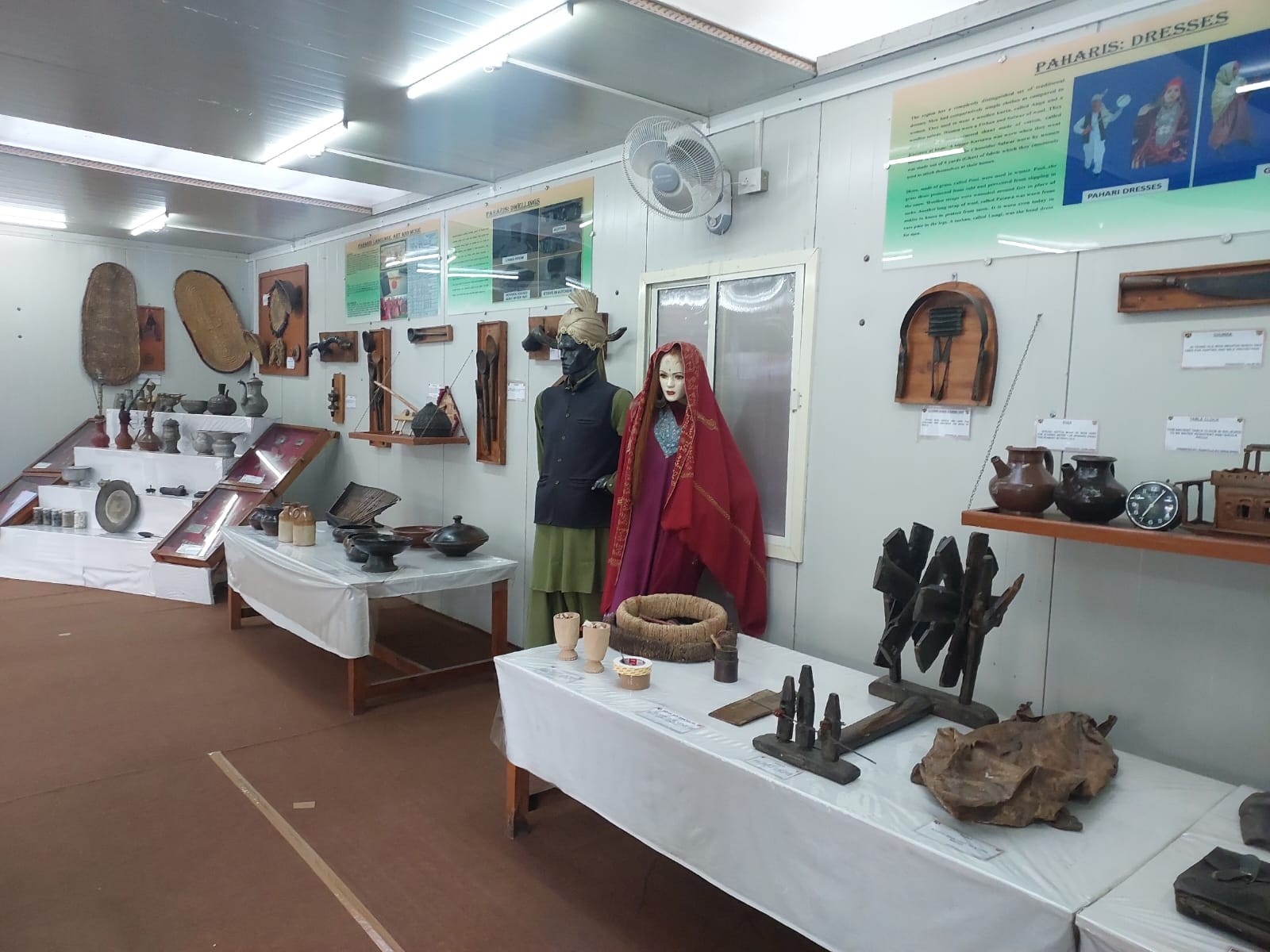
Situated near Aman Setu (Peace Bridge) at the last post on the LoC in Kashmir, the museum has emerged as a major attraction for tourists and history enthusiasts alike. Showcasing an extensive collection of vintage photographs, antique weapons, traditional household items and centuries-old artifacts, the museum reflects the diverse cultural heritage of the region, particularly of the Pahari and Gujjar communities.
The museum takes visitors on a journey through Kashmir’s past, highlighting the customs, traditions and lifestyles that once shaped life in the border areas. Among the notable exhibits is an 83-year-old “Chamre Ka Bag” (leather bag), historically used by village heads to collect Lagaan (revenue) during the Maharaja’s rule. Another prized artifact is an 86-year-old “Churra”, a traditional weapon once used for hunting and self-defence in remote mountainous areas.
One of the major attractions of the museum is an 86-year-old wooden Charkha, reminiscent of the Gandhian era, which was traditionally used for spinning cotton into yarn. The museum also houses ancient utensils, earthen pots and traditional household items that were once an inseparable part of Kashmiri life.
Adding to the historical significance is an iron chair believed to be over a century old, which was once used by village heads while conducting local court proceedings.
An Army official said the museum was initially located in Uri town but was shifted to Kaman Post three years ago after the Army declared the area a tourist destination to promote border tourism and preserve the cultural legacy of the region.
“The idea behind shifting the museum to Kaman Post was to make it more accessible to visitors and to showcase the rich cultural and historical heritage of Kashmir at one of the most significant locations along the LoC. The response from tourists has been encouraging,” the official said.
The official added that the museum not only serves as a repository of historical artifacts but also acts as a bridge connecting people with the region’s centuries-old traditions and way of life.
A local tourist guide at Kaman Post said the growing popularity of the spot and the museum has significantly boosted border tourism in the region.
“Earlier, very few tourists would visit these border areas, but now people are eager to see Kaman Post and the museum. Visitors are taking keen interest in the history and culture of Uri. This is creating livelihood opportunities for local guides, transporters and small businesses,” the guide said.
With increasing tourist footfall at Kaman Post, the museum is steadily becoming an important cultural landmark in Uri, especially for those keen to explore the lesser-known historical narratives of Kashmir.