Wetlands Are Not Wastelands: A Call to Save J&K’s Natural Defences
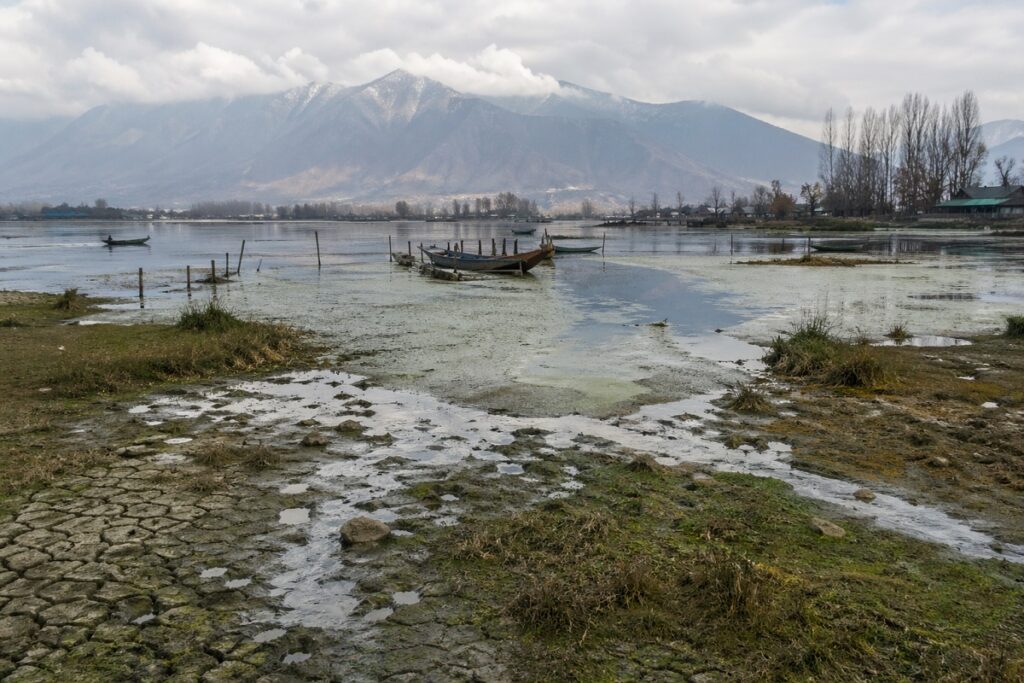
As encroachment, pollution, and climate stress shrink these fragile ecosystems, saving Jammu and Kashmir’s wetlands has become essential for flood protection, biodiversity and the region’s long-term survival
In Jammu and Kashmir, wetlands are too often spoken of as if they are empty spaces waiting to be used, filled, narrowed, diverted or built upon. This is one of the gravest ecological misunderstandings of our time. A wetland is not wasteland. It is living infrastructure. It stores floodwater, recharges groundwater, filters pollutants, moderates climate, supports fisheries, sustains birds, nourishes agriculture and quietly holds together the ecological balance on which human settlements depend. If there is one environmental priority that deserves urgent public attention in Jammu and Kashmir today, it is the protection and revival of wetlands.
This is not an abstract concern for birdwatchers or conservationists alone. It is a question of public safety, economic survival and intergenerational justice. In Kashmir, especially, the wetland system has historically acted like a sponge for the Valley. Wetlands such as Hokersar, Hygam, Shallabugh and the vast Wular Lake are part of a larger hydrological network that absorbs excess water, eases flood pressure and provides habitat for an astonishing range of life. Recent official and conservation reports continue to underline that wetlands in the Jhelum basin play a major role in flood absorption and ecological stability. To damage them is to weaken nature’s own defence system.
The warning signs have been visible for years. Wetlands across Jammu and Kashmir have suffered from encroachment, siltation, untreated sewage, solid waste, unplanned urban growth, road construction, weed infestation and careless tourism. In many places, the crisis has moved beyond gradual decline to structural degradation. Wular Lake, one of Asia’s largest freshwater lakes and a Ramsar site, has long battled heavy siltation, encroachment and habitat alteration. Hokersar, one of the Valley’s best-known wetlands and a Ramsar site since 2005, has also faced intense pressure from urban expansion, pollution and shrinking wetland character. Hygam and Shallabugh, now newly elevated in visibility through Ramsar recognition, are ecologically important but remain vulnerable to the same familiar pattern of neglect.
There is a tragic irony here. Jammu and Kashmir takes pride in its lakes, marshes, springs and water landscapes. Our poetry, memory and place names are tied to them. Yet our development practices often treat these ecosystems as disposable. We celebrate migratory birds when they arrive in winter, we invoke the beauty of our water bodies in tourism campaigns, and we speak reverently about nature in public forums. But on the ground, wetlands are narrowed by dumping, choked by effluents, cut off by poorly planned infrastructure and gradually converted into real estate logic. We cannot continue to admire wetlands in language while erasing them in practice.
The need for protection is even more urgent in the age of climate instability. Extreme weather events are no longer distant probabilities. Floods, erratic rainfall, prolonged dry spells and heat stress are becoming more likely across the Himalayan region. In such a context, wetlands are not luxuries; they are resilience systems. When floodplains, marshes and shallow lake zones are lost, floodwater has fewer places to go. When catchments are degraded and silt loads rise, wetlands lose their carrying capacity. When sewage and nutrient pollution increase, water quality declines and aquatic systems become more fragile. The result is not only biodiversity loss but heightened human vulnerability.
The 2014 floods remain etched in public memory, and one of the enduring lessons from that disaster is that ecological degradation magnifies catastrophe. Wetlands alone did not cause or prevent that tragedy, but their condition matters enormously in determining how water moves and where it accumulates. Every hectare reclaimed by nature is a hectare that can absorb, slow or distribute water more safely. Every hectare lost to encroachment is a future risk transferred to human settlements. Saving wetlands, therefore, must be seen as disaster preparedness.
There are some encouraging signs, and they deserve recognition. Conservation and restoration efforts at Wular indicate that public policy can make a difference when backed by seriousness and scale. Recent reports note boundary demarcation, the installation of pillars to prevent encroachment, desiltation work covering around 5 square kilometres of critically silted area, and the removal of roughly 1.31 lakh willow trees to restore open water and marsh habitat [8] [9]. These are not small interventions. They show that wetlands can be revived when institutions act with clarity and persistence.
Likewise, the broader recognition of wetlands such as Hygam and Shallabugh as Ramsar sites has symbolic and practical value. International designation cannot save a wetland by itself, but it raises the standard of accountability and strengthens the case for scientific management, monitoring and conservation investment. Bird censuses and avifaunal studies have repeatedly highlighted the global ecological importance of these habitats for migratory and resident waterbirds. This matters not only for biodiversity but for the region’s identity within a wider ecological flyway that connects Central Asia, South Asia and beyond.
Yet recognition without enforcement will not be enough. Jammu and Kashmir needs a wetlands policy culture that moves beyond announcements and occasional clean-up drives. First, encroachment must be confronted honestly. This is politically uncomfortable, socially sensitive and administratively difficult, but there is no serious conversation without land protection. Wetland boundaries must be scientifically mapped, publicly notified, physically demarcated and legally defended. Where encroachments are recent and unlawful, they must be removed. Where human dependence exists, rehabilitation must be humane, negotiated and lawful, but not endlessly deferred.
Second, sewage and waste inflows must be treated as a frontline issue. A wetland cannot be expected to serve as a natural purifier while being used as an open drain. Pollution control boards, municipal bodies and local administrations must coordinate far more effectively. The National Green Tribunal’s monitored attention to the challenges facing Kashmiri wetlands has already highlighted the need for continuous water-quality monitoring, sewage management and action against pollution sources. That momentum should not be lost in bureaucratic routine.
Third, catchment protection must become part of wetland conservation. A lake or marsh cannot be saved in isolation if the surrounding landscape is eroding, deforested or badly planned. Siltation is not just a wetland problem; it is a catchment problem. Roads, construction, quarrying, land-use change and vegetation loss in upstream areas all eventually show up in the wetland basin. If we want Wular, Hokersar, Mansar or Surinsar to survive, we must protect the ecological logic of the landscapes that feed them.
Fourth, local communities must be treated as partners, not afterthoughts. The people living around wetlands often bear both the costs of degradation and the burdens of regulation. Fishers, farmers, fodder collectors, boatmen and residents need to see conservation as something that improves their future rather than threatening their livelihood. That means livelihood-sensitive planning, support for sustainable tourism, incentives for wetland-friendly agriculture, transparent governance and community-based monitoring. Conservation cannot be imposed as a distant moral instruction; it must be rooted in local participation.
Fifth, wetland education needs to enter the public mainstream. Too many people still imagine a healthy wetland as a stagnant, mosquito-ridden patch of land that can be “improved” through filling or construction. Schools, colleges, local media and civil society must help change this perception. A wetland should be understood the way we understand a hospital, a road or a power station: as critical infrastructure, except more valuable because it is self-renewing when protected. Once the public imagination changes, political priorities usually follow.
Jammu and Kashmir also has an opportunity to build a model of conservation that links ecology with dignity and intelligent development. Eco-tourism, birding circuits, nature education, scientific research and cultural interpretation can all generate value if managed responsibly. But this must be low-impact and strictly regulated. Tourism that litters, commercialises and overbuilds wetland edges is not development; it is slow destruction under a decorative name.
The larger moral question is simple: what kind of region do we want to leave behind? One in which every open wetland edge is seen as a future construction site? Or one in which natural systems are restored because we finally understand their worth? Future generations will not forgive us if we inherit marshes, lakes and flood basins that protected life for centuries, only to hand them over as polluted remnants.
Saving wetlands in Jammu and Kashmir is not about returning to a romantic past. It is about securing a livable future. It is about recognising that ecological security is inseparable from social and economic security. It is about acting before collapse becomes irreversible. The science is clear, the evidence is visible, and the cost of delay is rising.
If we are serious about resilience, public health, biodiversity and sustainable development, wetlands must move from the margins of policy to the centre of governance. Protect them from encroachment. Stop turning them into dumps. Restore their hydrology. Regulate tourism. Support communities. Monitor them rigorously. Enforce the law. In the end, the choice is stark: either we save our wetlands, or we continue to destroy the very systems that save us. And in Jammu and Kashmir, that is a choice we can no longer postpone.
(The author is an assistant professor, a public speaker, and a social activist)
Related Posts
-

The Cost of Our Lifestyle Choices
-

Fear, Fuel, and the Politics of Perception
-

The Architect of Mu’amila-Bandi: Momin Khan Momin and the Poetics of Romantic Realism
-

Is Healthcare Sector shifting from Service-Oriented Care to Profit-Driven Practice?
-

Vanishing Wetlands in Kashmir
-

It’s The Driving Sense That Can Save Lives…!
-

Bridging the Awareness Gap and the AI-Driven Future of Mobility in Jammu & Kashmir
-

Sir Syed Sani: A Legacy of Knowledge, Unity, and Moral Authority
-

A Day of Bills and Backtracks: What NC’s Assembly moves Reveal about Legislative Intent
-

Why our Elders deserve Care, Love, and a Place at the Heart of Society
-

The Need for Corporate Social Responsibility in Kashmir Valley
-

The Plague Doctor of Islamabad
-

The Phenomenon of a Rolling Aspirant: A gentle plea to rethink career switching
-

Gender Neutral Representation in Jammu And Kashmir’s Textbooks: The Reform that Can’t Wait
-

The Dying Art of Houseboat Making
Leave a comment