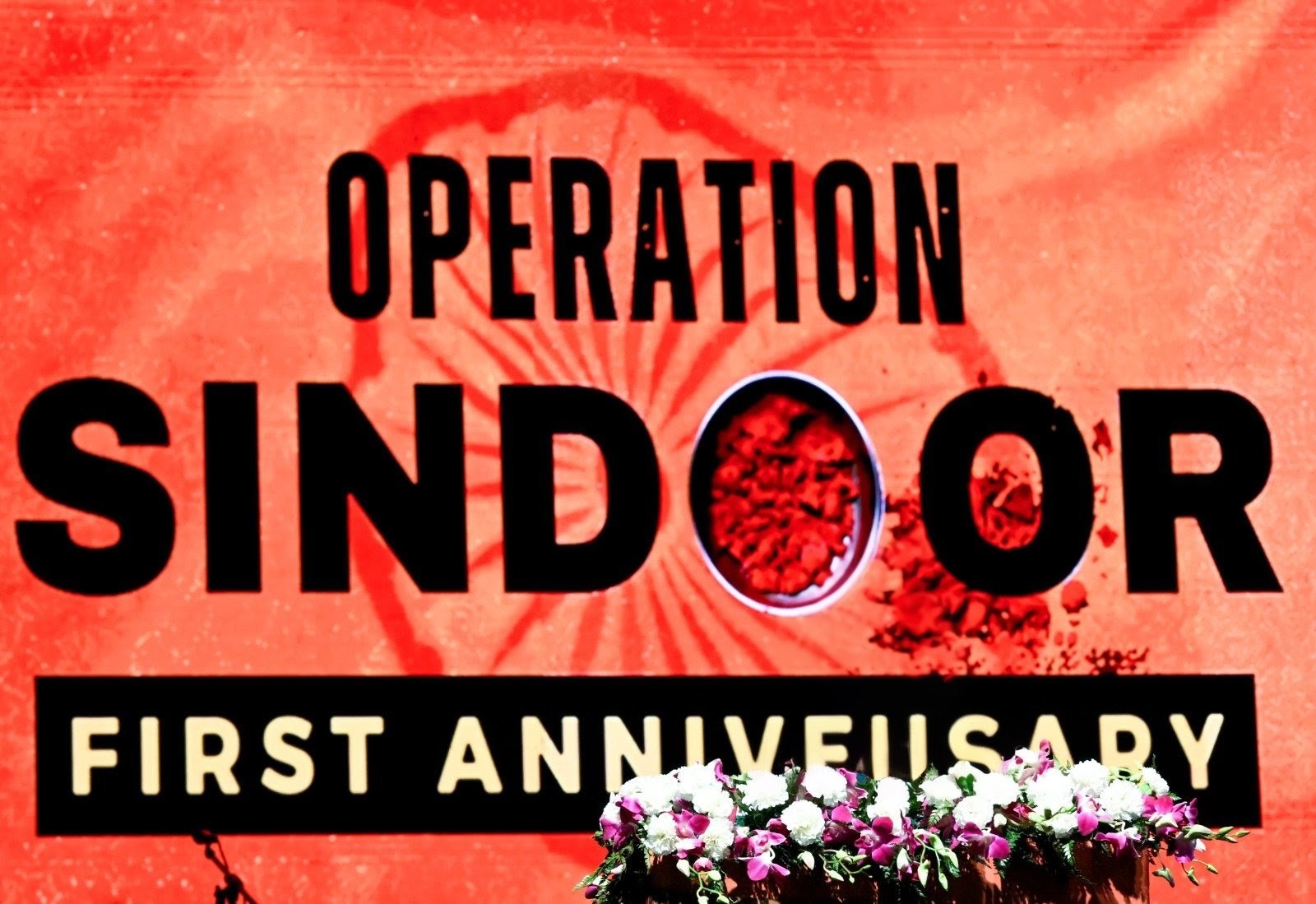
Operation Sindoor 1st anniversary :From Uri to Poonch, LoC villages pray for lasting peace
-
 Abid Bashir
- Comments 0
- 07 May 2026
‘Silence now feels peaceful but we remain alert’
Srinagar, May 06: A year after Operation Sindoor brought Kashmir’s border into sharp focus, villages along the Line of Control (LoC)—from Uri in the north to Poonch in the south—are marking the anniversary with a shared sentiment: hope and prayers to see peace as a permanent feature.
In these frontier settlements, where the LoC runs close to homes, farms and schools, the anniversary is less about the operation itself and more about the fragile calm that has followed.
Residents said the past year has been relatively peaceful compared to the period of heightened tensions that preceded it, but memories of fear and loss remain vivid.
On May 7, last year, escalation along the LoC had triggered intense shelling across several sectors, leaving a trail of damaged houses and disrupted lives. In many villages, families were forced to spend nights in underground bunkers or move to safer locations, uncertain of when normalcy would return.
“We had to leave everything behind and rush to safety,” recalled Abdul Hamid, a resident of Uri. “Our home was partially damaged, and for weeks, we lived in constant fear. Even today, those memories have not faded.”
In Keran and Tangdhar, residents shared similar experiences, describing nights filled with anxiety and days marked by uncertainty. Schools were shut, fields were left unattended, and daily routines came to a halt as people prioritised survival over everything else.
“For us, peace is not just a word—it is the difference between living and merely surviving,” said Shazia Bano from Tangdhar. “When shelling was happening last year, we didn’t know if our homes would still be standing the next morning.”
Further, Poonch district of Jammu, which bore a significant brunt of the shelling, families say the scars of that period are still visible. Damaged walls and repaired rooftops serve as gory reminders of last year.
“Many houses in our area were hit,” said Mohammad Yousuf, a resident of Poonch. “We rebuilt what we could, but the fear lingers. Now that things are calm, we just pray it stays this way.”
Despite these lingering fears, the past year has brought a sense of cautious optimism. Children have returned to classrooms, farmers are once again tending to their crops, and markets are functioning without frequent interruptions.
“There is a visible change,” said Bashir Ahmad, a farmer from Uri. “Earlier, we would hesitate to even step out during certain hours. Now, life has started to feel normal again. But we know how quickly things can change.”
Village heads across these regions said that sustained peace is essential for development and stability. Ghulam Nabi, a local representative, said that while the calm over the past year is encouraging, it must not be temporary. “You cannot build a future on uncertainty,” he said. “People here need assurance that the peace will hold—not just for a few months, but for years to come.”
Residents also spoke about the emotional toll of living in a conflict-prone area, where the sound of a distant blast or sudden noise can trigger anxiety even during peaceful times.
“The silence now feels different,” said a young resident from Keran. “Earlier, silence meant something was about to happen. Now, it feels peaceful—but we are always alert.”
On Tuesday (May 05, 2026), many villagers gathered in community spaces, offering prayers for continued calm along the LoC. The prayers, residents said, were not political—they were deeply personal, rooted in the desire for safety, stability, and a better future for the next generation.
“We don’t want our children to grow up with the same fears we had,” said Rafiqa Begum from Poonch. “All we ask is peace—nothing more, nothing less.”
As the first anniversary of Operation Sindoor passes quietly across these border regions, the message from Uri to Poonch is clear-- the past has been painful, the present is hopeful, and the future depends on whether peace can truly endure.
Related Posts
-

J&K’s Ranji win proud moment: PM Modi
-

Jammu Marathon symbolises J&K’s transformation: LG Sinha
-

Physical fitness integral to societal progress: CM Omar
-

J&K dairy grows 15%, but 7.4% samples fail safety tests
-

Kashmir’s rooftops power new energy dawn
-

Payroll Without Purpose
-

Self-styled journalists misusing platform, MLA Uri in assembly
-

Omar Abdullah urges ceasefire, calls on PM Modi to mediate Iran crisis
-

LG Sinha suspends Anantnag ADC, reassigns officer to Div Com Kashmir
-

LG, CM greet people on Mahavir Jayanti
-

J&K Govt orders transfers, postings
-

Govt to review District Planning Boards framework
-

150th Anniversary Closing Ceremony : Vande Mataram our identity, strength & vow: LG Sinha
-

Mission YUVA should become national benchmark: CM
-

LG assents to three Bills passed by LA

Leave a comment