International Year of Millets-2023
-
 By DR. PARVEEN KUMAR
- Comments 0
- 01 Jan 2023
MOVING ON TO MILLETS
Nutrient-rich, drought-tolerant and multipurpose; Millets are rightly being called as ‘Super Foods’ and ‘Food of Future’. They are nutri-cereals that provide most of the nutrients required for normal functioning of human body. The International Crop Research Institute for the Semi-Arid Tropics (ICRISAT) estimates that more than 90 million people in Africa and Asia depend on millets in their diets and 500 million people in more than 30 countries depend on sorghum as a staple food. However, in the past 50 years, these grains have largely been abandoned in favor of developing more popular crops like maize, wheat, rice, and soybeans.
In the Indian subcontinent, these are recognized as traditional grains, grown and consumed in the Indian subcontinent from the past more than 5000 years. These are one of the oldest foods known to humanity. Millets owing to their unique characteristics have been identified as a major category of food commodities to be propagated and promoted for enhancing nutritional levels of the population. Millets are a group of small grained cereal food crops which are highly nutritive, tolerant to drought and other extreme weather condition; do not require much input and most of them are natives of the country. These crops are called as ‘Nutri-cereals’ as they provide most of the nutrients required for normal functioning of human body. Millets are classified into major millets and minor millets based on their grain size. They are Pseudo millets also and are so called because they are not part of the Poaceae botanical family, to which ‘true’ grains belong, however they are nutritionally similar and used in similar ways to ‘true’ grains.
Millets as Nutri-Cereals
Recognizing the importance of millets in the nutritional security, the Ministry of Agriculture and Farmers Welfare, GoI has declared millets comprising of Sorghum (Jowar), Pearl Millet (Bajra), Finger Millet (Ragi/Mandua), Minor Millets i.e., Foxtail Millet (Kanngani/kakun), Proso Millet (Cheena), Kodo Millet (Kodo), Barnyard Millet (Sawa/Sanwa/Jhangora), Little Millet (Kutki), Brown top millet and two pseudo millets i.e., Buckwheat (Kuttu), Amaranth (Chaulai)) as ‘Nutri-Cereals’ for production, consumption and for trade and commerce. Millets are gluten free and non-allergenic and non acid forming foods. Millet consumption decreases triglycerides and C-reactive protein, thereby preventing cardiovascular disease. All millets are rich in dietary fibre. Dietary fibre has water absorbing and bulking property. It increases transit time of food in the gut which helps in reducing risk of inflammatory bowel disease and acts as detoxifying agent in the body. Millets act as a probiotic feeding for micro flora in our inner ecosystem. Millets hydrate our colon to keep us from being constipated. Niacin in millet can help lower cholesterol.
Nutritional Status of Millets
These nutri-cereals contain about 7-12% protein, 2-5% fat, 65-75% carbohydrates and 15-20% dietary fibre. The essential amino acid profile of the millet protein is better than various cereals such as maize. Millets contain fewer cross-linked prolamins, which may be an additional factor contributing to higher digestibility of the millet proteins. Small millets are good source of phosphorous and iron. Millets contributes to antioxidant activity with phytates, polyphenols, tannins, anthocyanins, phytosterols and pinacosanols present in it having important role in aging and metabolic diseases. All millets possess high antioxidant activities.
Major Millets
- Sorghum (Jowar): It is rich in protein, fibre, thiamine, riboflavin, folic acid, and carotene. It is also a good source of potassium, phosphorus and calcium with sufficient amounts of iron, zinc and sodium. A major portion of protein present in Sorghum is prolamin. Prolamin has a unique feature of lowering digestibility upon cooking which might be a health benefit for certain dietary groups.
- Pearl Millet (Bajra): Pearl millet contains considerably high proportion of proteins (12-16%) as well as lipids (4-6%). It contains 11.5% of dietary fiber. It increases transit time of food in the gut. Hence, reduce risk of inflammatory bowel disease. The niacin content in pearl millet is higher than all other cereals. It also contains foliate, magnesium, iron, copper, zinc and vitamins E and B- complex. It has high energy content compared to other millets. Pearl millet is also rich in calcium and unsaturated fats which are good for health.
- Finger Millet (Ragi): Finger millet has the highest mineral content and is the richest source of calcium (300-350 mg/100g). Finger millet proteins are unique because of the sulphur rich amino acid contents. The grains have excellent malting properties and are widely known for its use as weaning foods. It has high antioxidant activity.
Minor Millets
- Foxtail millet (Kakum): It is considered to be one of the most digestible and non allergic grains. It also contains minerals such as copper & iron.
- Kodo millets (Kodon): It has high protein content (11%), low fat (4.2%) and very high fibre content (14.3%). Kodo millet is rich in various B vitamins especially niacin, pyridoxine and folic acid as well as the minerals such as calcium, iron, potassium, magnesium and zinc. Besides, it also contains a high amount of lecithin and is an excellent for strengthening the nervous system.
- Little millet (Kutki/Shavan): Little millet, as its name goes, is smaller than other millets; but is high in iron content and also has high antioxidant activities. It contains about 38% of dietary fiber.
- Barnyard millet (Sanwa): It is the richest source of crude fiber and iron. The grains possess other functional constituents i.e., Gamma amino butyric acid (GABA) and Beta – glucan that are used as antioxidants and in reducing blood lipid levels.
- Proso millet (Chenna/Barri): This minor millet has the highest amount of proteins (12.5%) with a significant amount of carbohydrate and fatty acids. It is cheaper source of manganese as compared to other conventional sources like spices and nuts. The higher amount of calcium present in it also helps in bone growth and maintenance. Besides, this millet reduces cholesterol levels and also reduces the risk of heart diseases.
Pseudo Millets
- Buckwheat (Kuttu): It also contains about 18% crude protein with biological valuesabove 90%. This can be explained by a high concentration of all essential amino acids, especially lysine, tryptophan, and the sulphur-containing amino acids. It is also rich in iron(60–100 ppm), zinc (20–30 ppm) and selenium (20–50 ppb). It also contains aromatic compounds. Salicylaldehyde (2-hydroxybenzaldehyde) was identified as a characteristic component of buckwheat aroma. On an average one cup of cooked groats contains about 155 calories, with 6 grams of protein, 1 gram of fat, 33 grams of carbohydrate, and 5 grams of fiber. The Starch in groats is 25% amylase and 75% amylopectin and depending on hydrothermal treatment, buckwheat groats contain 7–37% of resistant starch.
- Amaranth (Ramdana/ Rajgira): With high protein content (13-14%) and a carrier of lysine, an amino acid that's missing or negligible in many others, this grain has also an oil percentage of 6 to 9% which is higher than most other cereals. Amaranth oil contains approximately 77% unsaturated fatty acids and is high in linoleic acid. It is also high in dietary fibre, iron, magnesium, phosphorus, potassium and appreciable amounts of calcium.
Millets are wonder foods and the unfortunate part is that owing to lack of knowledge regarding nutritional value of these crops, these have more or less lost their importance as vital crops. It is high time to promote the cultivation of these crops by educating masses about the health benefits of them.
Moving On To Millets
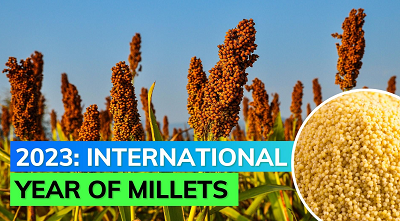
Millets are therefore an ideal solution for countries to increase self-sufficiency and reduce reliance on imported cereal grains. Considering the immense potential of millets in nutritional security and their ability to withstand climatic stress and grow in regions otherwise not feasible for cultivation and with minimal inputs, year 2023 is being celebrated as International Year of Millets. Infact, United Nations General Assembly at its 75th session in March 2021 declared 2023 the International Year of Millets (IYM 2023). Food and Agricultural Organization (FAO) is the lead agency for celebrating the Year in collaboration with all other relevant stakeholders. In April 2018, the government of India designated millet as a nutritious cereal and millet was also included in the POSHAN Abhiyan.
A nutritious cereal component for millet is being implemented in 212 districts across 14 states as a part of National Food Security Mission. So, the year 2023 celebrated as International Year of Millets provides us with an opportunity to raise awareness of and direct our policy attention to their large scale cultivation and use in our dietary intake; owing to their nutritional and health benefits and their suitability for cultivation under adverse and changing climatic conditions.
(The author is a faculty at SKUAST-K; can be reached at pkumar6674@gmail.com)
Related Posts
-

Ramadan Fasting & Liver Diseases: Few Practical Tips
-

Tracing Historical Legacy: From Nynee-Tal to Nainital
-

Silent Musings
-

Pakistan on the heap of uncertainties....!
-

Merits of Mother Tongue-Based Education
-

Maha Shivratri-Herath: The cultural code of Kashmir
-

Fading into Oblivion: The Daring Wakhi Sheperdesses of Gilgit- Baltisthan
-

In Pursuit of Social Justice through Agriculture
-

Pratibhignya and Quantum Consciousness: Journey beyond Perception and Time
-

Echoes From Forgotten Mountains: Tibet In War & Peace
-

The Rich Tapestry of Muslim Life in India
-

Ram Mandir: Real credit goes to RSS-VHP-BJP combine
-

Bytes of Diplomacy: Navigating the New Age
-

Understanding Diabetes
-

Mana Village: Flagship of ‘Vibrant Village Programme’ In Uttrakhand

Leave a comment