

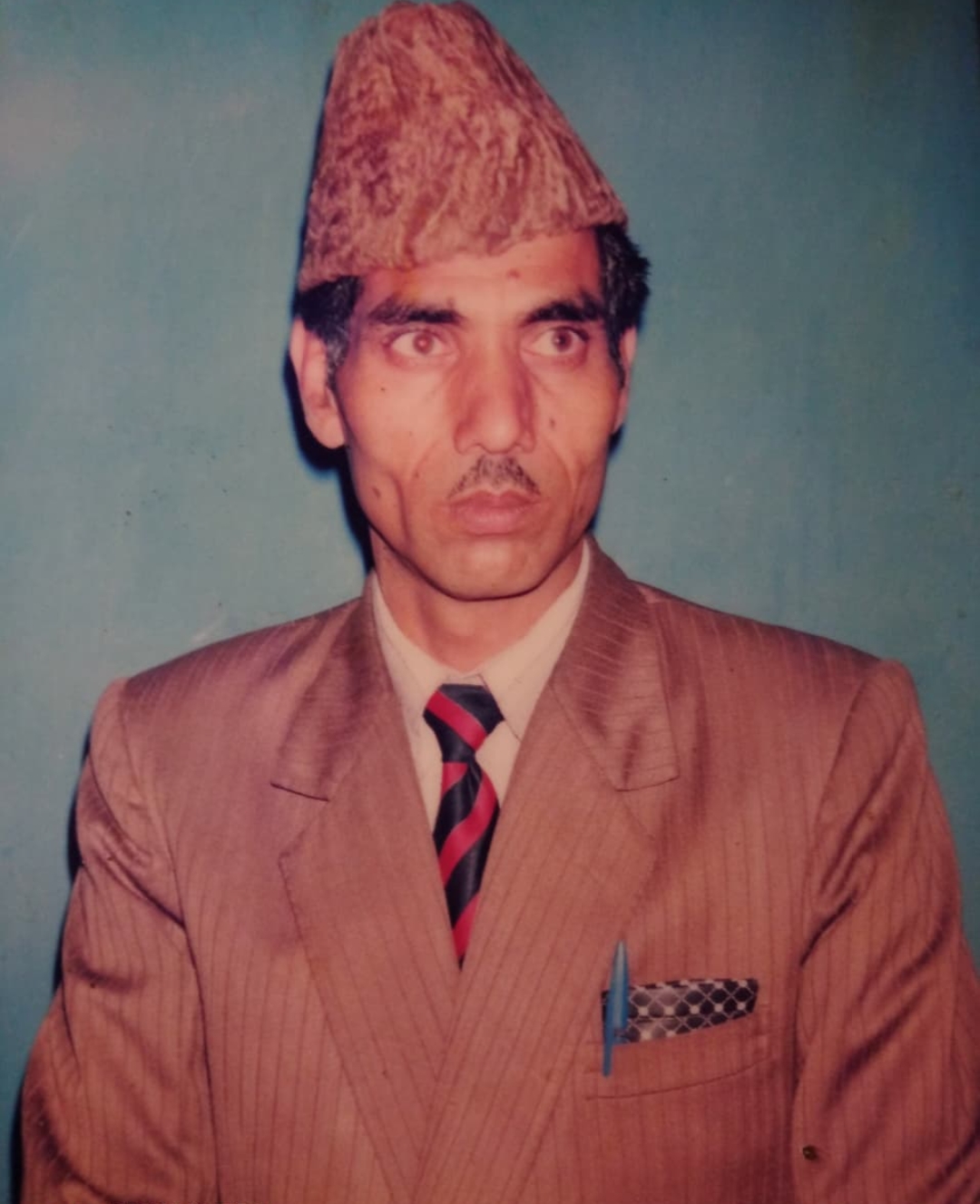
Seventeen years may have passed, but the “Mahagun” still stands tall, his shadow stretching across the valley, protecting and guiding the art he loved so dearly
TAHIR AHMAD NAJAR
TRIBUTE
The legacy of Ghulam Ali Majboor is not merely a chronicle of a life lived in the pursuit of art, but a monumental chapter in the survival of the Kashmiri cultural identity itself. As we mark the seventeenth year since his departure, the weight of his absence is felt deeply across the valley, yet his presence remains strikingly vivid through the scripts, the laughter, and the artistic standards he established during a lifetime of dedication. He was a legendary Kashmiri satirist, stand-up comedian, playwright, and folk artist.
To speak of Majboor is to speak of the very soul of Hanjigund, a small village in the Chadoora area of Budgam district that has long served as the heartbeat of Bhand Pather, the traditional folk theatre of Kashmir. Born on December 17, 1952, to Sunnaullah Bhat – a man who was himself a pillar of the folk-art community – Ghulam Ali Majboor was born into a world of rhythm, satire, and the profound responsibility of the storyteller. In those days, the village of Hanjigund was a sanctuary for an art form that was both a source of entertainment and a vital instrument of social justice.
Bhand Pather was historically the only medium through which the common folk could speak truth to power, utilising the mask of humour to critique the kings, the feudal lords, and the powerful elite who governed with an iron fist. However, the tragedy of this era was that while the art was essential for the psychological and social survival of the peasantry, the artists themselves – the Bhands -were often relegated to the lowest rungs of the social hierarchy. They were looked down upon, marginalised, and treated as mere jesters rather than the intellectual guardians of culture they truly were.
Growing up in this environment, Majboor witnessed the paradox of his people: they were the keepers of a flame that the rest of society was content to let flicker out. It was in this climate of looming extinction for folk art that a young Majboor, at the tender age of six, made his first foray into the world of performance. His entry into the art was not merely a choice but a natural extension of his existence, as he belonged to a community that was incredibly fertile in terms of art and craft. From that early age, he began the gruelling process of learning the “Pather”- the traditional plays that blended dance, music, and improvised dialogue.
As the years passed, his dedication transformed him from a student into a “Mahagun,” a title of immense prestige within the folk community. To be a Mahagun is to be a person who has attained mastery over the maximum number of art forms within the folk tradition; it requires a deep knowledge of the Surnai (flute), the Nagara (drum), the intricacies of classical Kashmiri dance, and the linguistic agility to navigate complex satirical scripts.
Majboor did not just acquire these skills; he embodied them, becoming a living encyclopedia of the Bhand tradition. He understood that for folk art to survive the onslaught of modernity and the stigma of the past, it had to be more than just a relic; it had to be a living, breathing force that could speak to the contemporary struggles of the people.
As a performer, Majboor was unparalleled, but it was perhaps as a writer and a visionary that he gave the most significant “new strength” to the medium. He realised that the oral traditions of the past needed to be anchored in powerful, written narratives if they were to withstand the test of time. He became a strong writer whose scripts were characterised by a unique blend of razor-sharp humour and profound humanism.
The humour he created was never superficial; it was a layered, intellectual wit that addressed the missing links in the social fabric of his time. His plays were powerful because they were comparative – they drew parallels between historical injustices and modern-day corruption, making the ancient art of Bhand Pather feel immediate and urgent for the audiences of the late 20th century.
Even now, seventeen years after his death, his scripts are studied and performed because they possess a timeless quality. They are not just plays; they are mirrors held up to society, reflecting its flaws with such grace and comedy that the viewer is forced to laugh and introspect simultaneously. This ability to weave complex social commentary into the accessible format of folk theatre was his greatest gift to the Kashmiri language and its people.
The loss of Majboor was not merely a loss for the stage; it was the loss of a great human being who defined what it meant to be pure and pious in an increasingly cynical world. He taught that the role of an artist was not just to perform, but to serve as a beacon of love and affection. Those who worked with him remember a man who was deeply grounded, despite his immense fame and status as a Mahagun.
He mentored generations of artists, teaching them that the “humour” they brought to the stage must be backed by a “pure heart” and a commitment to the truth. He lived his life with the same integrity he demanded of his characters on stage. In the seventeen years that have followed his passing, the void he left has only grown more apparent. We miss the specific brand of satire that only he could deliver—a satire that was biting but never malicious, aimed at the system but full of love for the people.
We feel his presence in the “teachings” he left behind, the silent lessons on how to maintain one’s dignity even when society tries to look down upon one’s profession. He proved that being a “Bhand” was a noble calling, a sacred duty to keep the conscience of the people alive.
Today, as we reflect on his journey from the village of Hanjigund to the heights of artistic mastery, we recognise that Majboor was the bridge between the old world and the new. He took a dying art form and gave it a modern vocabulary, ensuring that the stories of the Kashmiri people would not be forgotten. His life was a testament to the fact that art, when practised with sincerity and brilliance, can overcome any social barrier.
He was a writer of scripts that still resonate, a performer of dances that still inspire, and a human being whose kindness is still whispered about in the corridors of the folk theatre community. The love and affection he taught his peers and his audience have become his most enduring legacy. It is often said that an artist dies twice – once when they take their last breath and once when their name is spoken for the last time. By that measure, Majboor is very much alive.
He is alive in the laughter of the children who watch a Pather in the village square; he is alive in the ink of the young playwrights who try to emulate his wit; and he is alive in the hearts of a people who refuse to let their culture fade away. Seventeen years may have passed, but the “Mahagun” still stands tall, his shadow stretching across the valley, protecting and guiding the art he loved so dearly.
We miss him, yes, but more importantly, we carry him with us, honouring the man who was a great folk artist, a legendary humorist, and above all, a magnificent human being. May Almighty Allah grant you the highest place in Jannah.
(Author is a Kashmir-based theatre artist and can be reached at: tatahirsharp324@gmail.com)