‘Bangladesh’ village loses tourism lifeline as rising Wular waters submerge road
-
 Shafat Malik
- Comments 0
- 11 May 2026
25 shikaras now down to 8; Rs 2.5 crore repair tenders floated
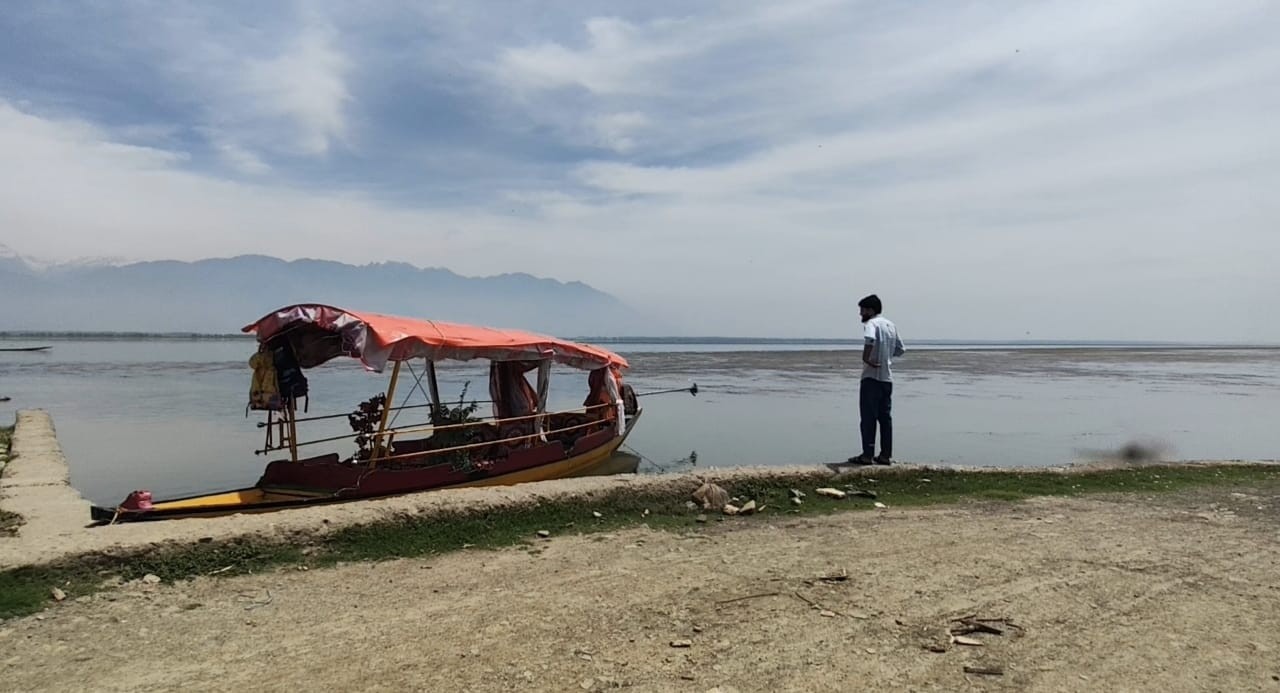
Bandipora, May 10: On most evenings two summers ago, the lakeside in a "Bangladesh" village would remain crowded until sunset. Cars lined the narrow road skirting Wular Lake, tourists waited for shikara rides along wooden platforms built near the shore, tea stalls stayed open late into the evening, and young men ferried visitors into stretches of open water. Today, much of that same road lies underwater, several shikaras have been pulled ashore, and residents of this village in north Kashmir’s Bandipora district say a tourism economy that had briefly transformed the area is slowly fading with the lake’s rising waters.
The road does not disappear suddenly. Residents say it happens in stages whenever Wular swells during spring and early summer. First, water gathers along the edges, and then long stretches become difficult to distinguish from the lake itself, forcing vehicles to move cautiously through submerged portions.
For the past two seasons, locals say, this has become a recurring reality on the link road connecting "Bangladesh" and neighbouring Zurimanz villages to the Bandipora-Sopore highway. Unlike the Boulevard Road running along Dal Lake in Srinagar, which sits above the water level, this road lies almost parallel to Wular at a much lower elevation, leaving it vulnerable each time snowmelt and rainfall increase the lake’s inflow.
Residents say the villages first began attracting sustained tourist attention around two or three years ago after photographs and short videos of the area spread widely across social media platforms. The tourism department and the Wular Conservation and Management Authority (WUCMA) subsequently developed parts of the lakeside by creating viewpoints, installing a floating jetty and constructing wooden platforms for shikaras in an effort to promote the area as an eco-tourism destination.
What followed, residents say, was the busiest tourist period the villages had witnessed in years.
“It changed very quickly,” said a resident associated with boating activity in the area. “Earlier, people would pass through this village without stopping. Then, suddenly, tourists started coming specifically for this place.”
The first two shikaras were introduced by two brothers from the village who began offering rides through sections of Wular where the lake widens into a broad bay-like stretch that locals often describe as a beach. Within a short period, according to residents, the number of shikaras increased to around 25 as more families invested savings into boats, hoping tourism would provide an alternative source of livelihood in a village largely dependent on fishing and seasonal labour.
Now, locals say, only around eight or nine remain operational.
The rest have been pulled onto the banks, some covered with tarpaulin sheets and others left leaning against embankments that no longer open regularly because tourist arrivals have fallen sharply over the past two seasons.
“The problem is not the place. The problem is reaching the place,” another resident said while standing near a submerged stretch of road. “That is the road. Tourists come here, see the condition, and many of them return without even entering the village.”
Residents say motorcycles avoid the route almost entirely during periods of high water levels, while pedestrians frequently walk through ankle-deep or knee-deep water to cross submerged sections. During evenings, when visibility drops further, even small passenger vehicles hesitate to use the stretch. Locals say this has gradually reduced tourist arrivals, particularly among families travelling from Srinagar and other districts.
For villagers who had reorganised their livelihoods around tourism, the slowdown has been difficult to absorb.
One boat owner said his family had spent most of its savings constructing and decorating a wooden shikara after witnessing the tourist rush during the early phase of the boom. “There were evenings when every boat remained occupied,” he said. “People waited for rides. Children took photographs. The shore would remain crowded till late evening.” He now keeps the shikara parked near his home for long periods because visitors have declined sharply.
Residents describe the decline as gradual but unmistakable. First, fewer travel vloggers visited the village. Then families stopped staying late into the evening. Tea stalls shut one after another. Rows of brightly painted shikaras along the shore began shrinking until the lakefront itself grew noticeably quieter.
Officials familiar with the matter said proposals to raise the road level and strengthen vulnerable stretches have been discussed at different levels over the years.
Executive Engineer, R&B Bandipora, Shahid Saleem, told Rising Kashmir that the department has already floated tenders for the project and work is expected to begin shortly. “The project has been taken up at an estimated cost of over Rs 2.5 crore. Tenders have already been invited, and we are hopeful work will start within the next 15 days,” he said.
For residents here, the irony remains difficult to ignore. The villages became visible because of their proximity to Wular. Now the same lake that drew tourists is cutting the villages off from them.
In the evenings, the landscape still carries the same stillness and scale that once made Bangladesh and Zurimanz trend across social media. Fishing boats continue moving through reeds, the mountains behind the villages darken slowly at sunset and the waters of Wular stretch outward like an inland sea. But along the edge of the village, the road keeps slipping beneath the lake, and with it, residents say, the brief promise that tourism had brought to "Bangladesh".
Related Posts
-

Gulshan Books: A cultural space for readers & thinkers
-

Kashmir’s singing sensation Aejaz Rah transitions from music to silver screen
-

No sour grapes as G’bal farmers reap high-quality bumper harvest
-

Hope rekindled in J&K’s Tourism Sector after CM's assurances
-

“Kashmir is Calling”: First road show from Dal Lake to Anantnag sends a message of peace & unity
-

Inspired by output, Kokernag farmers plants hope with Hazelnuts
-

As calm returns to LoC, border families face long road to recovery
-

J&K sizzles under relentless heatwave, docs urge precaution
-

Pahalgam attack shatters Kashmir’s film tourism revival
-

Tourism defies Terror: ‘Chalo Kashmir’ sends national message of unity
-

Kashmiri Haj pilgrims fight for basic comfort & care in Saudi Arabia
-

With pen as sword, Chander M Bhat’s fight to preserve Kashmiri Pandit culture
-

First Cherry cargo train set to depart from J&K for Mumbai on June 3
-

35-year battle ends with Shiv Lingam’s return to Jogishwari Mandir, Rainawari
-

Eid-ul-Adha Gift: In a first, SMC to provide free door-to-door hooper service for safe disposal of animal waste

Leave a comment