

‘Jhelum system relies heavily on snow, glacier melt; continued warming may initially increase discharge but lead to long-term decline’
Abid Bashir
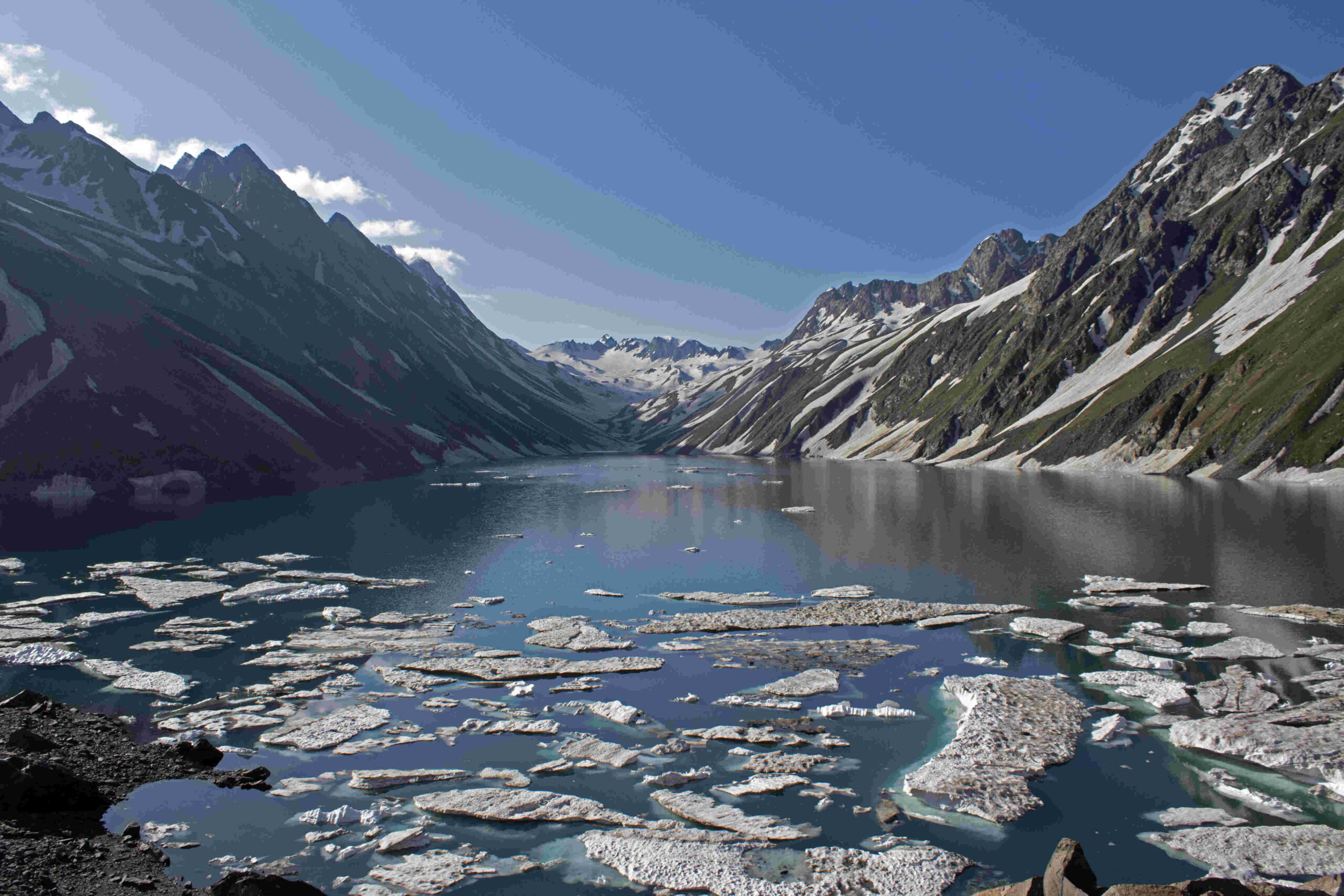
Srinagar, May 29: Kashmir’s highest mountains are warming faster than its cities, triggering rapid glacier retreat, shrinking snow reserves and altering the fragile balance of the Himalayan ecosystem, according to a major scientific study conducted by the Department of Earth Sciences at the University of Kashmir.
The research, led by renowned glaciologist Professor Shakil Ahmad Romshoo and his team, examined nine benchmark glaciers across the Kashmir Himalayas using Landsat satellite data collected between 1980 and 2013. The findings reveal a stark transformation underway in the upper reaches of the Valley where temperatures are rising more aggressively at elevations above 3,000 metres.
Scientists found that glaciers in the region have lost nearly 17 per cent of their area over the past three decades. The study also recorded a significant upward shift in the equilibrium line altitude (ELA) — the boundary between snow accumulation and snow melt — by nearly 80 to 300 metres.
For researchers, the upward movement of snowlines is among the clearest signs that high-altitude Kashmir is heating rapidly.
“When snow survives only at increasingly higher elevations, it indicates that lower mountain zones are no longer cold enough to sustain permanent ice,” the study explains.
The findings add to growing global evidence that mountain regions are warming faster than lowland areas, a phenomenon scientists describe as elevation-dependent warming.
Unlike urban heat trapped by concrete and pollution in cities, Himalayan warming is being driven by complex climatic shifts involving declining snow cover, changing precipitation patterns and increased heat absorption by exposed rocky surfaces.
As glaciers melt and snow cover reduces, darker mountain terrain absorbs more solar radiation instead of reflecting it back into the atmosphere. Scientists say this creates a dangerous feedback loop that accelerates warming further.
The study observed a significant rise in annual air temperatures across the Kashmir Himalayas, while precipitation showed only a slight and statistically insignificant decline. Researchers concluded that temperature rise remains the dominant factor behind glacier retreat in the region.
Experts warn that the consequences extend far beyond the mountains themselves.
Kashmir’s glaciers function as natural water reservoirs, releasing meltwater gradually into rivers and streams during summer months. The shrinking cryosphere could therefore affect irrigation, drinking water supplies, hydropower generation and even horticulture-dependent livelihoods across the Valley.
The Jhelum river system and many of its tributaries rely heavily on snow and glacier melt originating in the higher Himalayas.
Scientists caution that continued warming at high elevations may initially increase river discharge due to accelerated melting, but over time, it could lead to declining water availability once glacier reserves diminish substantially.
The study also found that not all glaciers reacted equally to climate change. Some glaciers showed faster retreat despite being exposed to similar climatic conditions. Researchers attributed these differences to local topographic factors such as slope, altitude, debris cover and glacier orientation.
This means geography is now playing a critical role in determining which glaciers survive longer in a warming Kashmir Himalaya.
Outside the polar regions, the Himalayas contain one of the largest concentrations of ice in the world and are often referred to as Asia’s “water towers.” Their glaciers feed major river systems including the Indus, Ganga and Brahmaputra, sustaining millions of people downstream.
Climate experts believe the latest findings from Kashmir should serve as an urgent warning for policymakers and environmental planners.
Researchers have stressed the need for long-term glacier monitoring, scientific mapping of snow reserves and climate adaptation strategies to prepare for future water stress in the region.
For now, the crisis remains largely invisible to most people living in the Valley below. But high above Kashmir’s pine forests and alpine meadows, the Himalayas are already changing — and warming faster than ever before.