

NDMA uses UT’s Phuktal experience to strengthen framework
Ovaise Gul
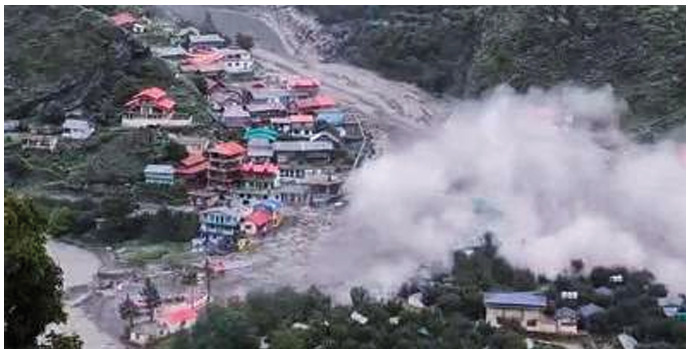
Srinagar, May 19: Jammu and Kashmir’s experience in handling mountain disasters and glacial threats, particularly the Phuktal river landslide and the formation of artificial lakes, is emerging as an important reference point in India’s expanding community-based disaster resilience framework, with national agencies highlighting the Union Territory’s role in shaping regional preparedness strategies for the Himalayan belt, according to a report by the National Disaster Management Authority (NDMA).
The report, titled ‘Aapda Mitra: Community Volunteering Framework India’s Model and Way Forward,’ released earlier this year, states that experiences drawn from the Phuktal river landslide and artificial lakes in Jammu and Kashmir have contributed to the NDMA’s guidelines on managing Glacial Lake Outburst Floods (GLOFs) and landslide dam threats.
“India’s community resilience mission is deeply connected to regional and global disaster risk reduction landscapes. The disasters across South Asia and the Hindu Kush–Himalayan regions have cross-border implications,” the report reads.
It adds that NDMA’s work in developing guidelines for GLOF management and standard operating procedures for averting threats from landslide dams—drawing on experiences from J&K—not only guides national practice but can also inform regional protocols for early warning, controlled breaching, and evacuation.
The report suggests that cooperation under SAARC, BIMSTEC, and bilateral arrangements could include joint risk assessments, shared monitoring of vulnerable glacial lakes, data exchange on river flows, and cross-border simulation exercises involving local administrations and communities. Engagement through BRICS and other global platforms has strengthened India’s outward orientation, with active participation in the BRICS Joint Task Force on Disaster Risk Management.
The Aapda Mitra and Yuva Aapda Mitra experiences, with their emphasis on training, equipment, inclusive participation, and integration with formal institutions, offer an emergent model that could be of interest to other low and middle-income countries facing similar risk profiles and resource constraints, the report mentions.
Presenting rigorous evidence on lives saved, people evacuated, response time reduced, and social cohesion strengthened through these schemes at international forums, including the Global Platform for Disaster Risk Reduction and UNFCCC, can position India as a provider of south-south technical cooperation in community-based resilience.
Alignment with the Sendai Framework for Disaster Risk Reduction and the SDGs provides a global framework for measuring progress. By explicitly tracking Aapda Mitra and Yuva Aapda Mitra indicators—including number of trained volunteers, frequency of community drills, existence of local plans, and coverage of high-risk districts—within national reporting to Sendai and the SDGs, India can ensure that community resilience remains a core component of its global commitments and domestic accountability.